
What Does the Bible Say About Rest? Why God Wants You to Stop Striving
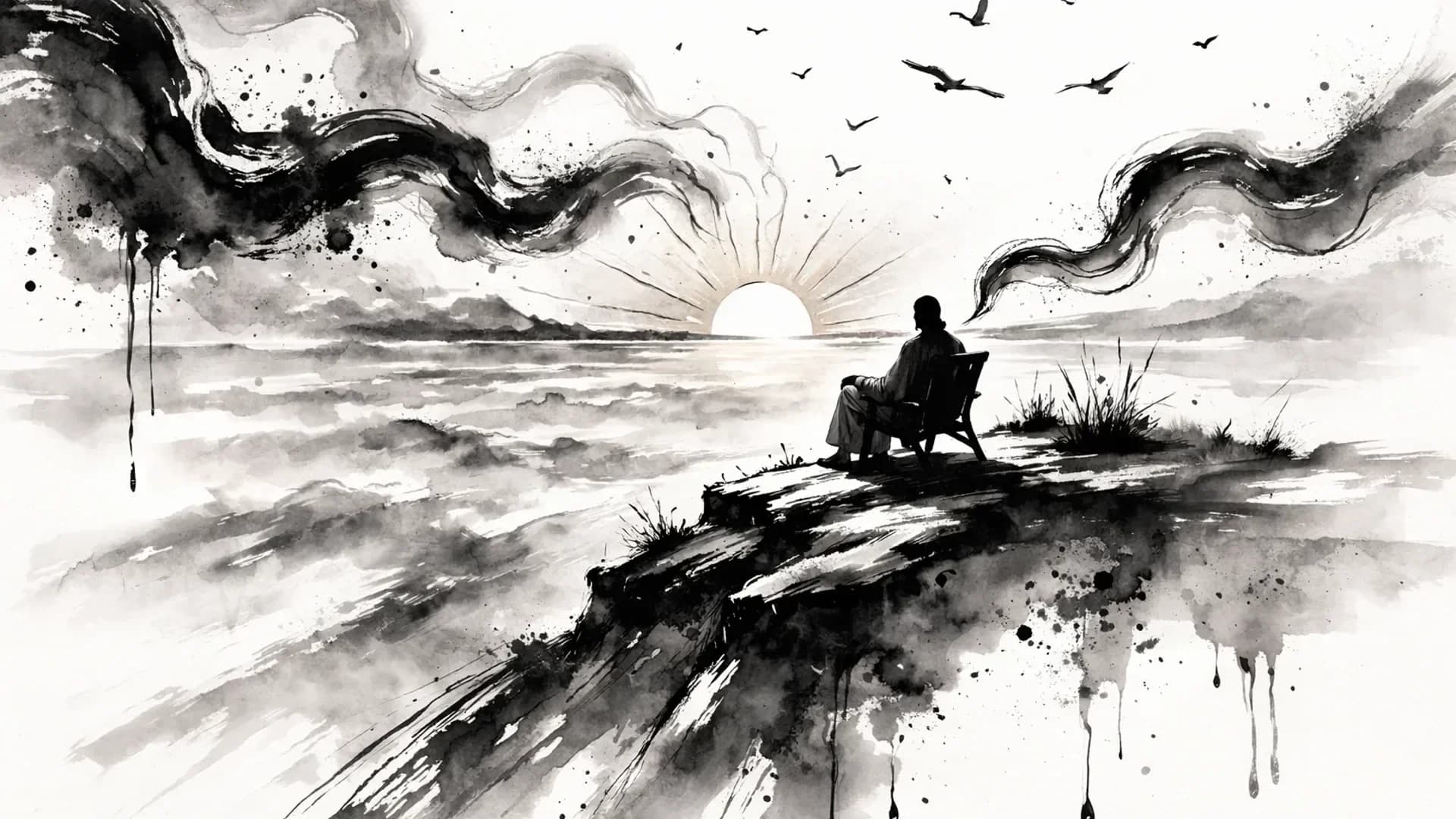
God finished all His work, looked at everything He had made, and then did something unexpected. He rested. He did not rest because He was tired. He rested because everything was complete.
That single act, resting on the seventh day, became the foundation for every promise of peace, provision, and protection in the Bible. And yet most believers still operate as if rest is a luxury they cannot afford.
The Bible does not treat rest as an afterthought. Rest is the first thing God blessed. Rest is the first thing God called holy. Rest is the narrow gate that leads to life. And rest is the only battle you have left under grace.
This article collects the key Scriptures about rest, traces the original Hebrew and Greek words, and shows why the finished work of Christ changes rest from a discipline into a gift.
What "Rest" Means in the Original Hebrew and Greek
The Bible uses several different words for rest. Each one reveals a different facet of what God designed rest to be.
Hebrew: (shabath) שָׁבַת means "to cease, to stop, to desist." This is the root behind the word Sabbath. It appears first in Genesis 2:2 when God ceased from His work. The emphasis is not on relaxation. It is on completion. God stopped because the work was done.
Hebrew: (menucha) מְנוּחָה means "a resting place, settled peace." This is the word used in Psalm 23:2 for "still waters," literally "waters of rest." It describes a place where the soul is settled and the supply is steady. It is the same word Ruth found when Naomi said, "My daughter, shall I not seek rest for you, that it may be well with you?" (Ruth 3:1, NKJV). Menucha is not the absence of activity. It is the presence of settled provision.
Hebrew: (nuach) נוּחַ means "to rest, to settle down, to remain." This is the verb behind the name Noah, (Noach) נֹחַ. When the ark came to rest on the mountains of Ararat, Genesis uses this word (Genesis 8:4). When the dove found no resting place for the sole of her foot, Moses used the same word. Nuach pictures a life that has found solid ground.
Greek: (katapausis) κατάπαυσις means "a causing to cease, a rest." This is the word used in Hebrews 4 for the rest that remains for the people of God. The prefix kata intensifies the meaning: a full and complete cessation from labor. It is not a nap. It is a permanent state.
Greek: (anapausis) ἀνάπαυσις means "a refreshment, a recovery of strength." This is the word Jesus used in Matthew 11:28 when He said, "I will give you rest." The prefix ana means "up" or "again," describing a rest that lifts you and restores you. Jesus did not offer a break from life. He offered a Person who restores strength.
Together, these words build a complete picture. Biblical rest is a finished work you enter (shabath), a settled place where supply flows (menucha), a solid ground where your life comes to rest (nuach), a permanent cessation from self-effort (katapausis), and a Person who refreshes your soul (anapausis).
The First Mention of "Holy" Is About Rest
Most people assume the first time the word "holy" appears in the Bible, it describes God Himself, or the angels, or the law. It does not. The first occurrence of (kadosh) קָדוֹשׁ, meaning "holy, set apart," is in Genesis 2:3:
The first thing God ever called holy was a day of rest. God did not set apart a ritual, a sacrifice, or a building. He called a day holy because the work was finished.
This matters because it tells you what holiness is at its root. Holiness is not frantic effort to be good enough. Holiness is the state of someone who knows the work is complete. God did not sanctify the first day when the work began. He sanctified the seventh day when the work was done.
Under the new covenant, you live in the finished work of Christ. Every day is the seventh day. Every day is holy because the work is complete.
The First Mention of "Grace" Is About Rest
The first time the word "grace", (chen) חֵן, appears in the Bible, it is connected to a man whose name means rest:
Noah, (Noach) נֹחַ, means "rest." His father Lamech named him with this prophecy: "This one will comfort us concerning our work and the toil of our hands, because of the ground which the Lord has cursed" (Genesis 5:29, NKJV).
Rest found grace. The man whose name means "rest" was the first in the Bible to receive grace. That is not a coincidence. It is a pattern that runs through the entire Bible: the more you rest, the more grace meets you. The more you strive, the more grace recedes. Grace and rest are inseparable.
This connection between rest and grace shows up repeatedly. Abraham received the covenant while he was in a deep sleep (Genesis 15:12). Jacob received his blessing while he slept on a stone (Genesis 28:11-16). Solomon received wisdom while he slept (1 Kings 3:5). God does His best work when you stop doing yours.
10 Key Bible Verses About Rest
1. Genesis 2:2-3: God Rested
God did not rest because He was exhausted. Isaiah 40:28 says that He "neither faints nor is weary." He rested because everything was finished. He blessed and sanctified that rest, and then He invited humanity to live in it.
2. Exodus 20:8-11: Remember the Sabbath
Under the old covenant, the Sabbath was a day. Under the new covenant, the Sabbath is a Person. Colossians 2:16-17 says the Sabbath was "a shadow of things to come, but the substance is of Christ." The substance of rest is Jesus Himself. You do not observe a day; you abide in a Person.
3. Psalm 23:1-2: He Makes Me Lie Down
The "still waters" in Hebrew are (me menuchot) מֵי מְנֻחוֹת, meaning "waters of rest." Before the Lord restores or guides you, He first makes you rest. The very first act of the Good Shepherd is to settle you. Provision follows rest, not the other way around. When you lie down, He leads. When you rest, He restores.
4. Isaiah 30:15: In Returning and Rest
Four words define God's strategy for deliverance: return, rest, quietness, confidence. None of them involve panic. None involve human scheming. Israel's response to this promise was the most tragic phrase in Scripture: "But you would not." They chose horses and foreign alliances instead of God. They trusted self-effort. God's people often reject rest not because they doubt God, but because rest feels irresponsible.
5. Matthew 11:28-30: Come to Me
Jesus offers two kinds of rest here. The first rest, "I will give you rest," is a gift. You receive it the moment you come to Him. This is rest for your conscience. Your sins are forgiven. The debt is paid. The second rest, "you will find rest for your souls," comes from learning His character. When you see that He is gentle and lowly, your soul settles. Rest for the conscience is given. Rest for the soul is found by looking to Him.
The Greek word for "rest" here is (anapausis) ἀνάπαυσις, a restoration that lifts you up. Jesus does not just relieve your burden. He replaces your yoke with His. And His yoke is easy because He carries the weight.
6. Psalm 46:10: Be Still and Know
The Hebrew for "be still" is (raphu) רָפוּ, meaning "let go, release your grip, cease." It is the same root used in a military context for dropping weapons. God is not asking for a quiet time. He is telling you to drop your weapons and let Him fight. The command to be still is a command to trust.
7. Hebrews 4:9-11: A Rest Remains
The word "rest" in verse 9 is not katapausis. It is (sabbatismos) σαββατισμός, meaning a Sabbath-rest. The writer chose a unique word to say that the Sabbath principle has not been cancelled. It has been fulfilled in a Person. And the only diligence left for you is the diligence to stop striving. More on this below.
8. Exodus 33:14: My Presence Will Go with You
God's presence and rest are linked. Where He is, rest follows. Moses did not receive a roadmap. He received a companion. The rest God promised was not a destination; it came from His presence on the journey. You do not need a plan if you have the Guide.
9. Jeremiah 6:16: The Ancient Paths
The same tragic refusal appears here as in Isaiah 30:15. God points to the ancient path of rest. The people refuse. Human nature resists rest because rest requires trust. You cannot rest unless you believe someone else has the situation handled. Rest is the most visible expression of faith you can demonstrate.
10. John 19:30: It Is Finished
The Greek word is (tetelestai) τετέλεσται, meaning "it stands finished, it is complete, paid in full." Archaeologists have found this word stamped on ancient tax receipts to mark a debt fully discharged. When Jesus said "It is finished," He declared the same completion that God declared on the seventh day of creation. Every invitation to rest in the Bible points forward to this single moment. The work is done. You can stop.
The Rephidim Principle: Your Only Battle Is to Remain at Rest
In Exodus 17, Israel arrived at a place called Rephidim. The Hebrew word (Rephidim) רְפִידִם means "resting places." And at this resting place, Amalek attacked.
The name Amalek comes from the root (amal) עָמָל, which means "painful toil, wearisome labor." Put the picture together: painful toil attacks every time you enter a place of rest.
This was the only battle Israel faced between Egypt and Sinai, during the period of pure grace before God gave the law. That detail matters. Under grace, you have only one enemy: the temptation to leave rest and return to self-effort.
Moses went up the hill, sat on a rock, and raised his hands. When his hands stayed up, Israel won. When his hands dropped, Amalek prevailed. Aaron and Hur came beside him, placed him on a stone (a picture of Christ, the Rock), and held his hands steady until sundown.
The Hebrew word for "steady" in Exodus 17:12 is (emunah) אֱמוּנָה, the same word translated "faith" or "faithfulness." Moses's hands showed faith, and Israel won. The entire battle was settled by one man resting on a rock with his hands lifted, supported by two others.
This is a picture of the Christian life. You sit on the Rock. You lift your hands. Others support you. Amalek, the picture of painful toil, is defeated. Israel did not win by human effort. Victory came through rest.
God was so serious about this battle that He swore perpetual war against Amalek:
The spirit of anxious toil will resist you for the rest of your life. That is why Hebrews 4:11 tells you to "be diligent to enter that rest." There is a fight involved, but the fight is not to produce results. The fight is to stay seated.
Hebrews 4: The Rest That Remains
Hebrews 4 is the most concentrated teaching on rest in the entire New Testament. The writer makes five arguments for why rest is not optional.
1. There is one thing God tells you to fear.
The Bible repeatedly says "fear not." But here it says "let us fear," and the only thing to fear is missing the rest. God tells you to be afraid of one thing: not resting. In every other area, He says do not fear. In this area, He says fear. That should tell you how central rest is to the Christian life.
2. The good news must be mixed with faith.
Israel heard the good news of a land of rest. They did not enter because they did not mix the word with faith. Faith is the activator of rest. Unbelief, the opposite of rest, kept an entire generation in the wilderness.
3. The works were finished from the foundation of the world.
God completed everything before you arrived. Your health, your provision, your family, and your calling: every work you will ever need was finished before the world began. You can rest because the work is already done, not because your circumstances look safe.
4. The word "evil" means "full of labors."
The writer warns against having "an evil heart of unbelief" (Hebrews 3:12). The Greek word for "evil" is (poneros) πονηρός. Its first definition is "full of labors, toils, and annoyances." An evil heart in the biblical sense is first and foremost a heart stuffed with anxious toil. Self-effort is not virtue. It is the very thing the Bible calls evil.
5. The only labor left is to enter the rest.
The oxymoron is deliberate. Labor to rest. Work at not working. The writer takes the language of effort, diligence, and aims it directly at rest. The Christian life has one assignment: stop striving and enter the finished work. Everything else flows from that position.
Seated with Christ: Rest as Your Position
The New Testament does not just invite you to rest. It tells you that rest is your permanent position.
You are already seated. The verb is past tense. God did not say "try to sit down" or "earn a seat." He placed you there. A seated position is the posture of someone whose work is complete. Kings sit on thrones because the battle has been won. Judges sit because the verdict has been reached. You sit because Christ finished the work.
When Hans Selye, a heart specialist in the early twentieth century, studied the chairs in his clinic, he noticed that every patient's chair was worn on the front edge rather than the back. The patients sat on the edge and leaned forward. They gripped the armrests. Their lives matched: high stress, heart disease, chronic unrest. The woman who upholstered those chairs spotted it before the doctor did. Stress makes you sit on the edge. Faith makes you lean back.
You are seated with Christ in heavenly places. That is not a metaphor. It is your address. The devil cannot reach you in the place of rest, because rest is a domain he cannot enter. Jesus said the unclean spirit "goes through dry places, seeking rest, and finds none" (Matthew 12:43). The enemy is restless. He cannot operate in the zone of rest.
The Vine Life: What Rest Looks Like in Practice
In John 15, Jesus gave the clearest picture of what rest looks like in daily life.
The Greek word for "abide" is (meno) μένω, meaning "to stay, to remain, to dwell." It is the simplest possible instruction. Stay where you are. Do not try to become the vine. You are the branch. The vine supplies. The branch just bears what the vine produces.
If you could interview a grape-producing branch, it would have nothing impressive to report. "I did not struggle. I did not produce anything. I just stayed attached. The sap did the work. The fruit appeared. I got the credit."
That is the Christian life. You do not generate peace. You abide in the Prince of Peace, and peace flows through you. You do not manufacture wisdom. You stay connected to Christ, "in whom are hidden all the treasures of wisdom and knowledge" (Colossians 2:3), and wisdom arrives when you need it.
The vine life is not passive. A branch connected to the living vine will bear fruit. Laziness is impossible when you are joined to someone who has a holy zeal. But the effort comes from the vine, not from the branch. You will do more from rest than you ever did from stress.
What Happens When You Worry Instead of Rest
The areas you worry about most are the areas where grace flows least.
Picture pipes of supply from heaven: one for your marriage, one for your children, one for your finances, and one for your health. The supply is steady and uninterrupted. But when you worry about one area, your anxiety squeezes that pipe shut. The supply from heaven does not stop. But on your end, the flow is blocked.
A public-listed company executive once shared this observation: "Every time I worry about a situation and rush into my office to tell my directors what to do, things get worse. But when I stop and listen to the Word and just rest, somehow things work out better." Even a business mistake turned to profit when she stopped striving.
Peter describes this in his first letter:
The devil devours those who carry cares. He has no access to the carefree. That is why the instruction to cast your cares comes immediately before the warning about the enemy. Drop the worry, and the enemy loses his foothold.
The irritation you feel toward your spouse, your children, or your coworkers often starts here. It begins with the unrest already inside you, not with what they did. When you stop worrying, you grow patient. When rest fills the space that anxiety occupied, you become a different person in every relationship.
Rest Is Not Laziness
Rest and laziness look nothing alike.
A lazy person avoids responsibility. A resting person carries responsibility from a different source. The lazy person has no vine. The resting person is connected to the living vine and draws supply every moment.
Paul describes his own ministry this way:
He outworked everyone, yet he attributed all of it to grace. That is the paradox of rest. You accomplish more, not less. But the fuel is different. You burn without burning out, like the bush Moses saw on the mountain.
The Sabbath command in Exodus was never about inactivity. It was about trust. Could Israel believe that God would provide enough on the sixth day to cover the seventh? Could they trust that no manna would spoil? The test was not "can you do nothing?" The test was "can you trust someone else to handle it?"
Rest is faith made visible. It is not the absence of work; it is the absence of self-effort in the work. You still show up and do the work. You still prepare and serve. But the internal engine has changed. You are no longer the supplier. You are the branch.
How to Enter God's Rest Today
You do not produce rest. You receive a Person.
Jesus said, "Come to Me... and I will give you rest" (Matthew 11:28). He did not say "figure it out" or "try harder to relax." He said come. The original Greek is even more direct: "I, my Person, will rest you." Rest is not a technique. Rest is a Person, and His name is Jesus.
Here is what rest looks like today:
1. See the work as finished. When a symptom appears or a deadline presses, tell yourself: the works were finished from the foundation of the world. God saw this moment before you were born and already prepared the answer.
2. Speak about God, not about the problem. Psalm 91:2 says, "I will say of the Lord, 'He is my refuge and my fortress; my God, in Him I will trust.'" What you say about God matters more than what you feel about the circumstance. Your mouth is the doorway to rest.
3. Let go and let the supply flow. Stop squeezing the supply pipe. The moment you release worry in one area, grace flows into that area. The provision was always there. Your grip was the obstruction.
4. Stay connected to the vine. Hear the Word. Worship. Take communion. Sit at His feet like Mary did. One thing is needful, and that one thing is to enjoy His presence. Everything else flows from that position.
5. Fight to stay restful. The spirit of Amalek will test you. Deadlines will press. Bad news will arrive. Your only battle is to remain at rest. When you keep your hands lifted and your seat on the Rock, the battle is His.
The gospel's answer to striving is not "try harder to rest." The gospel's answer is "receive what has already been finished."
You are not climbing toward rest. Rest has already come down to you.
Enjoyed this? Get a short devotional like this in your inbox every morning.