
What Does the Bible Say About Tithing Under Grace?
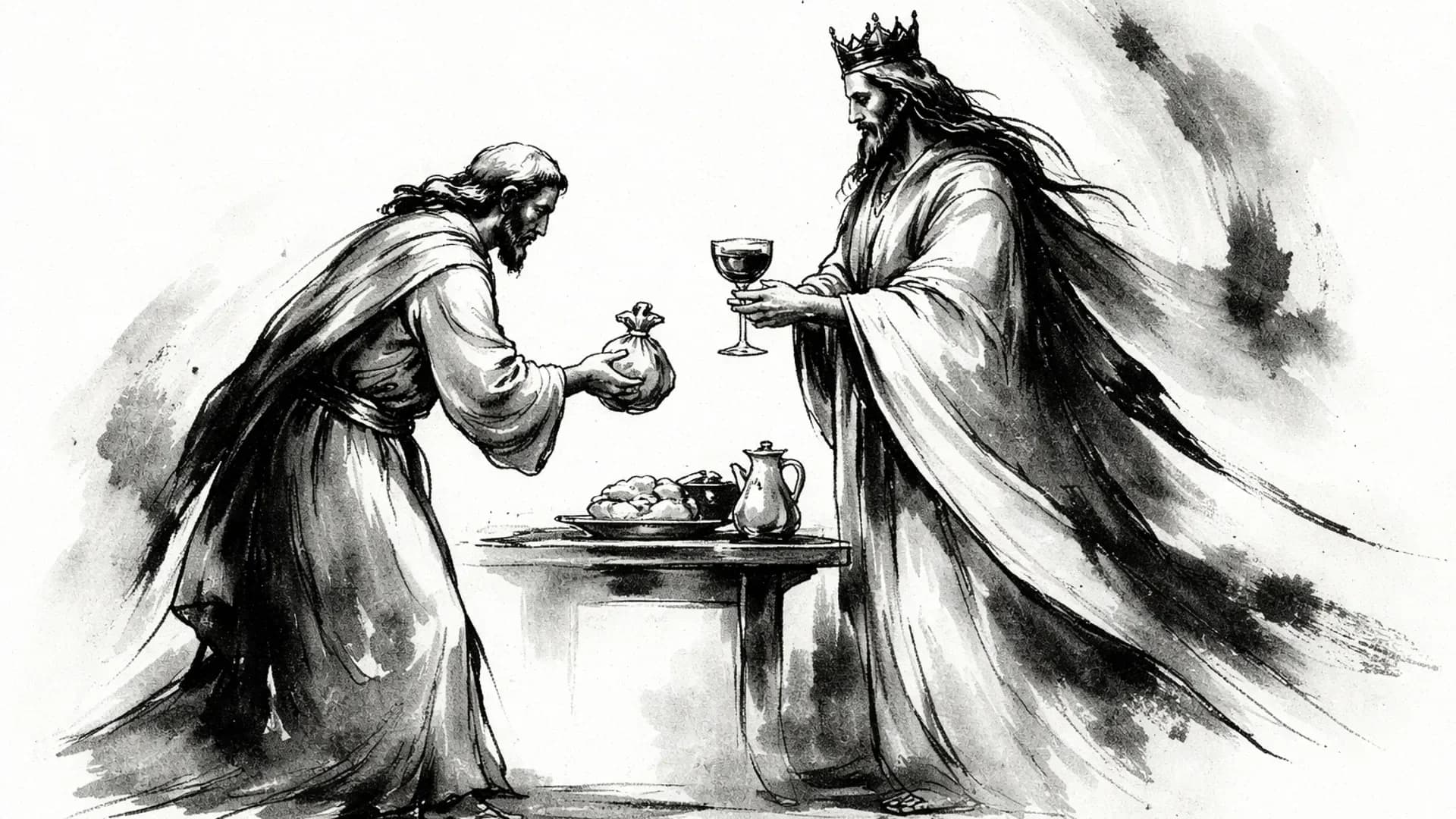
A man gave ten percent of everything he owned to a priest, four centuries before the law of Moses existed. No command. No obligation. No temple. Just a grateful response to the God who delivered him.
That man was Abraham. And the priest was Melchizedek.
Most conversations about tithing start with obligation. "Should I tithe?" "Will God punish me if I don't?" "Is tithing still required?" These are law questions. And the Bible has a grace answer.
This article traces what the Bible actually says about tithing: from Abraham's voluntary gift, through the Mosaic law, to the radical freedom of New Covenant generosity. It examines the original Hebrew and Greek words, addresses common misconceptions, and shows why grace produces more generosity than law ever could.
What "Tithe" Means in the Original Hebrew
The English word "tithe" comes from the Old English word for "tenth." In Hebrew, the word is (ma'aser) מַעֲשֵׂר, derived from (eser) עֶשֶׂר, the number ten. A tithe, in its simplest definition, is one-tenth of your increase.
In Greek, the equivalent word is (apodekatoo) ἀποδεκατόω — "to give a tenth." This word appears in the Gospels when Jesus speaks to the Pharisees and in Hebrews when the author discusses Abraham and Melchizedek.
But here is the detail most people miss: the concept of the tithe existed before any commandment required it.
Before the Law: Abraham and Melchizedek
The first mention of tithing in the Bible is Genesis 14. Abraham had just won a battle to rescue his nephew Lot. On the way back, a mysterious figure appeared: Melchizedek, the king of Salem and priest of God Most High.
Melchizedek blessed Abraham first. Then Abraham gave. The blessing preceded the gift. Abraham did not tithe to earn a blessing. He tithed because he had already received one.
There was no law at this point. Moses would not receive the commandments for another 430 years (Galatians 3:17). Abraham's tithe was a free act of gratitude, not a legal obligation. No one told him to do it. He responded to grace with generosity.
And Melchizedek brought bread and wine. Two elements that point directly to the communion table. This priest did not come to collect. He came to serve. He came to bless. Grace does not demand; it supplies.
Under the Law: The Tithe in Israel
When God established the Mosaic covenant at Sinai, tithing became part of the legal system. The law prescribed not one tithe, but multiple tithes:
- The Levitical Tithe: 10% of all produce given to the Levites, who had no land inheritance (Numbers 18:21–24).
- The Festival Tithe: a second 10% set aside for the annual feasts in Jerusalem (Deuteronomy 14:22–27).
- The Poor Tithe: every third year, an additional 10% was collected for foreigners, orphans, and widows (Deuteronomy 14:28–29).
When you add these together, the total annual obligation ranged from 20% to over 23%, depending on the year. The popular idea that "the tithe is just 10%" does not reflect the full picture of the Mosaic system.
Under the law, the tithe was compulsory. It was part of a national taxation system tied to the temple, the priesthood, and the land of Israel. It functioned as both worship and welfare, a structure designed for a theocratic nation.
This matters because the New Testament makes a clear distinction: believers are no longer under the Mosaic law.
The stone has been replaced by grace. The system changed. The priesthood changed. And with it, the basis for how God's people give.
Malachi 3: The Most Misquoted Verse on Tithing
No verse gets quoted more in tithing conversations than Malachi 3:8–10:
This passage is powerful. But context matters. Malachi spoke to Israel under the Old Covenant, a nation bound by the Mosaic law, with a functioning temple, a Levitical priesthood, and a storehouse system. The people had neglected their obligations under a covenant they had agreed to keep.
To apply this verse directly to New Covenant believers requires you to place yourself back under the very system that Christ fulfilled. Paul addressed this directly:
The curse of the law, including the curse for withheld tithes, landed on Jesus at the cross. He paid more than you owed. You cannot be cursed for something Christ already bore. The gospel brings freedom, not burdens.
Does this mean Malachi 3 has no relevance? Not at all. The principle stands: God is generous, and He rewards those who trust Him with their resources. The promise of open heavens is real. But the mechanism has changed. You are not under a system of curses and blessings tied to legal compliance. You live under a covenant of grace where God supplies everything.
Jesus and Tithing
Jesus mentioned tithing only once in a direct teaching, and His words reveal more than most people realize:
Two observations. First, Jesus spoke to people still under the Old Covenant. The cross had not yet happened. The new covenant had not yet been inaugurated. He affirmed the tithe because, at that moment, the law was still in force.
Second, He exposed the Pharisees' error: precise tithing without justice, mercy, or faith. They measured out a tenth of their garden herbs while they ignored the heart of God. Tithing without love is religion without relationship. The fruit that rules cannot grow is the fruit the Pharisees lacked.
After the cross, the apostles never once commanded tithing in any letter to the churches. Not in Romans. Not in Corinthians. Not in Galatians, Ephesians, Philippians, Colossians, or Thessalonians. Not in Timothy, Titus, or Philemon. Not in Hebrews, James, Peter, John, or Jude. The silence is significant, especially given how much Paul wrote about giving.
Under Grace: The New Covenant Standard
The New Testament does not abolish generosity. It transforms the motivation behind it. Paul's clearest teaching on giving is found in 2 Corinthians 8–9, where he addressed a financial collection for the church in Jerusalem.
Three principles emerge:
- "As he purposes in his heart": the amount is decided by the individual, not prescribed by a percentage.
- "Not grudgingly or of necessity": giving under compulsion violates the spirit of New Covenant generosity.
- "God loves a cheerful giver": the heart behind the gift matters more than the size of it.
A fixed percentage is absent. Paul could have said "give ten percent." He did not. He said give as you purpose, freely, willingly, cheerfully. Grace does not wait for you to be good; it empowers you to be generous.
The very next verse reveals why:
God makes grace abound so that you have abundance, not just enough, but overflow. Abundance was always His plan. And the purpose of that abundance is "every good work," which includes generous giving. Grace-fueled generosity is a cycle: God gives to you, and you give through what He has supplied.
The Greek Word for "Cheerful Giver"
The word translated "cheerful" in 2 Corinthians 9:7 is (hilaros) ἱλαρός. This is the Greek root of the English word "hilarious." It describes a state of joyful readiness, not somber duty or reluctant compliance, but glad, eager generosity.
The Septuagint, the Greek translation of the Old Testament, uses a related word in Proverbs 22:8:
This is the kind of giver God loves. Not the one who calculates a minimum percentage to avoid punishment. Not the one who gives out of fear. The one who gives because something inside has changed.
When you understand that God has already blessed you with every spiritual blessing in heavenly places (Ephesians 1:3), generosity stops feeling like a withdrawal and starts to feel like a distribution. You are not losing resources. You are channeling supply that already belongs to you.
Hebrews 7: Why the Priesthood Changes Everything
The book of Hebrews builds an extended argument about Melchizedek, and it has direct implications for how we understand tithing. The author writes:
The Hebrew name Melchizedek, (Malki-Tsedeq) מַלְכִּי־צֶדֶק, means "king of righteousness." And his title as king of Salem, (Shalem) שָׁלֵם, means "peace." He is a type of Christ: the King of Righteousness and the King of Peace.
The argument in Hebrews 7 is straightforward:
- Abraham, the father of Israel, tithed to Melchizedek.
- The Levitical priests, Abraham's descendants, collected tithes under the law.
- But Melchizedek's priesthood is greater than the Levitical priesthood, because Abraham, the ancestor of Levi, paid tithes to Melchizedek, not the other way around.
- Jesus is a priest "according to the order of Melchizedek" (Hebrews 7:17), not according to the order of Levi.
And here is the conclusion:
The priesthood changed. The law changed with it. The entire Levitical system, including the tithe law that supported it, was fulfilled in Christ. Jesus is your High Priest now, and His priesthood operates on a completely different basis: not law, but grace.
This does not mean Abraham's example is irrelevant. It means the opposite. Abraham's tithe was pre-law. It came from faith, not from obligation. It pointed forward to a priesthood based on righteousness and peace, not rules and rituals. Your righteousness is a gift, not a badge.
Koinonia: The New Testament Word for Generosity
The New Testament introduces a word that reshapes how we think about giving: (koinonia) κοινωνία. Most translations render it as "fellowship" or "communion," but its meaning runs deeper. Koinonia means a shared partnership, a joint participation in something together.
Paul used this word to describe financial generosity:
The financial gift was not a tax. It was koinonia, a partnership in the gospel. The believers in Macedonia and Achaia saw themselves as participants in the same mission, and they expressed that partnership through their money.
Paul also wrote:
This is not a command to tithe. It is a call to partnership. When you support a teacher, a church, or a ministry, you share in the fruit of that work. Your giving is not a payment; it is participation. The church is not a building, but a family, and families share with one another.
In Acts 2:42, koinonia is listed alongside the apostles' teaching, the breaking of bread, and prayer as one of the four pillars of early church life. Generosity was never an afterthought. It was built into the foundation.
10 Key Verses on Tithing and Giving
1. Genesis 14:20: Abraham's Voluntary Tithe
Before any law, Abraham gave freely. The first tithe in Scripture was a response to blessing, not a condition for it.
2. Malachi 3:10: The Storehouse Promise
God invites Israel to test His faithfulness. The promise of open heavens is real, but the context is Old Covenant Israel, and the mechanism for New Covenant believers is grace, not legal compliance.
3. 2 Corinthians 9:6–7: The Cheerful Giver
The New Testament standard: give from the heart, not under compulsion.
4. 2 Corinthians 9:8: Grace for Every Good Work
God supplies more than enough, so that generosity is always possible.
5. Galatians 3:13–14: Redeemed from the Curse
The curse for breaking the law, including the Malachi 3 curse, fell on Christ. The blessing of Abraham comes to you through faith, not through tithing. Stop trying to earn what God already gave.
6. Hebrews 7:12: The Law Changed with the Priesthood
A new priesthood requires a new system. The Levitical tithe belonged to the Levitical priesthood. Christ's priesthood operates on grace.
7. Luke 6:38: The Principle of Return
Jesus teaches the principle of sowing and reaping, without mentioning a fixed percentage. The measure you choose determines the measure you receive.
8. Proverbs 3:9–10: Honor the Lord with Your Substance
The principle is clear: put God first in your finances, and He will fill your storehouse. Your mountains will drop new wine.
9. Philippians 4:19: God Shall Supply
Paul wrote this to the Philippians, who had just sent him a financial gift. Their generosity activated a promise: God Himself will supply all your need. Not some. All. Position comes before provision.
10. Acts 20:35: More Blessed to Give
A direct quote from Jesus, preserved by Paul. Generosity is not a burden. It is the more blessed path.
So Should Christians Tithe?
This is the question everyone asks. And the honest answer requires more than a yes or no.
Is tithing commanded in the New Testament? No. The apostles never prescribed a ten-percent requirement for the church.
Is tithing wrong? Absolutely not. If you choose to give ten percent, or twenty, or fifty, that is between you and God. Safety is not stewardship. God honors those who honor Him with their resources.
Is tithing a good starting point? Many believers find that it is. Abraham tithed before the law. The early church practiced radical generosity. A committed percentage can be a practical way to express trust in God's provision.
What does grace change? Grace changes the motivation. Under law, you tithe because you must. Under grace, you give because you want to. Under law, the amount is fixed. Under grace, you purpose in your heart. Under law, fear of a curse drives you. Under grace, love for a Father fuels you. The law's hard job was to show you need a Savior. Grace gives you a new reason to give.
The same source material that taught about tithing and prosperity offered this perspective: "The first 10% goes to the Lord, the tithe. You can never, never outgive the Lord." The context was not obligation. It was trust. The church in that example also practiced the "Joseph principle" of setting aside 20% of income as wise stewardship. That surplus, invested well, multiplied and funded growth for years. Painful effort cannot add to God's blessing, but wise stewardship of His provision always multiplies.
The real question is not "How much must I give?" The real question is "How much has God given me?" When you start with what you have received, generosity becomes the natural response. The economy of abundance is God's default: your limit is not His.
The tithe debate often misses this: grace does not lower the standard. Grace raises it. The law asked for ten percent. Grace asks for your whole heart. And when your heart belongs to God, your wallet tends to follow, not under threat, but with joy. How anxiety blocks supply is the real financial problem. Trust opens what fear closes.
Grace did not come to make you stingy. Grace came to make you free. And free people are the most generous people on earth.
Enjoyed this? Get a short devotional like this in your inbox every morning.