
What Does the Bible Say About Insecurity?
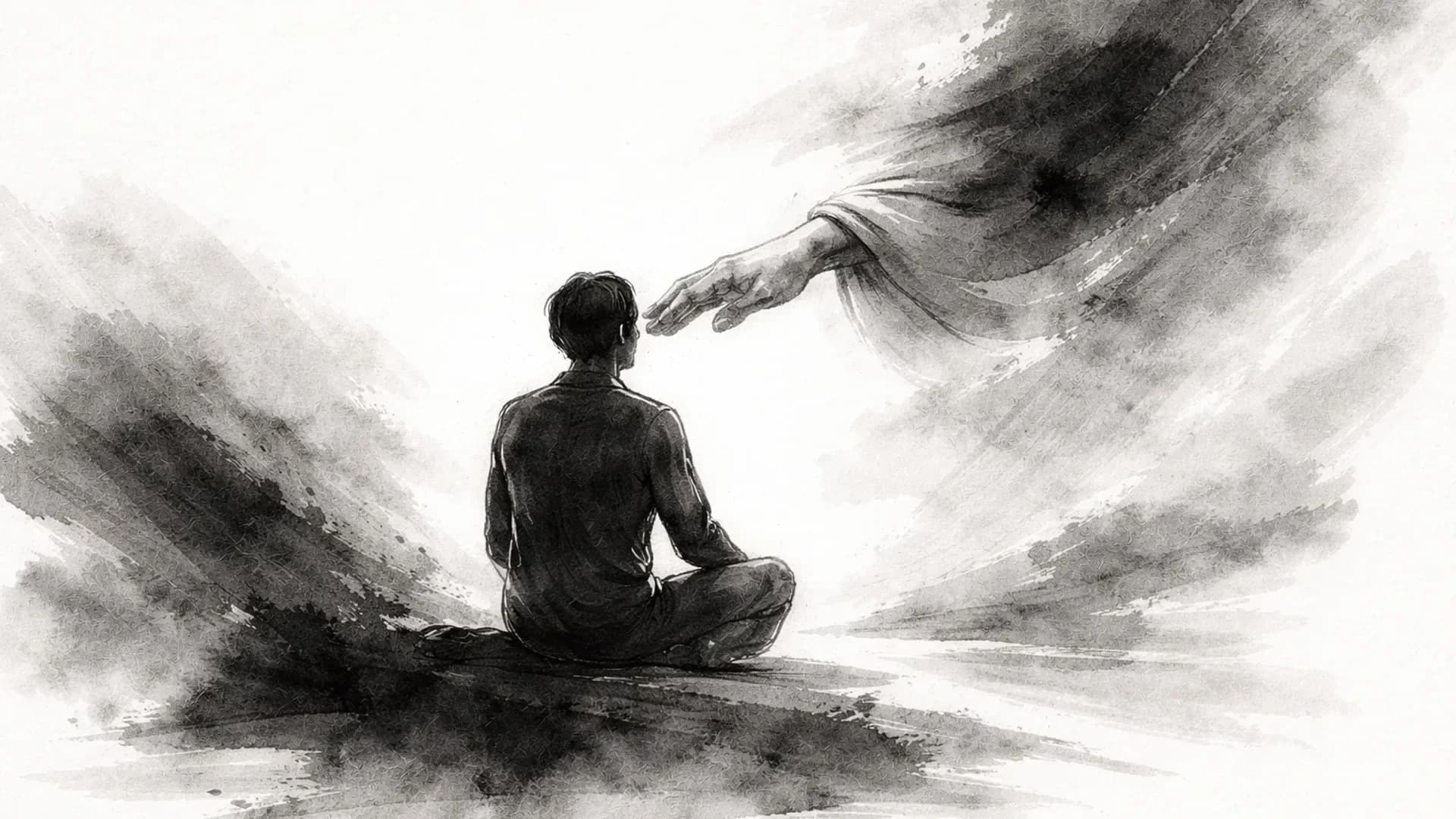
Gideon hid in a winepress. Moses told God to send someone else. Jeremiah said he was too young. Three men called by God, and every one of them believed they were the wrong person for the job.
Insecurity is not a modern condition. It did not arrive with social media or performance reviews. It has been part of the human experience since the fall, when Adam and Eve hid from God and covered themselves because, for the first time, they felt exposed.
The Bible does not ignore insecurity. It names it, shows it in the lives of its greatest figures, and answers it not with self-help techniques, but with a revealed identity. God's consistent response to insecure people is not "try harder to believe in yourself." His response is "let me show you who you already are."
This article traces the key Scriptures on insecurity, examines the original Hebrew and Greek, and presents the grace-centered answer that the Bible offers to every person who has ever felt not enough.
What "Insecurity" Means in Biblical Language
The English word "insecurity" does not appear in most Bible translations. But the concept runs through both Testaments, carried by words that describe fear, shame, smallness, and a divided heart.
The Hebrew word (batach) בָּטַח means "to trust, to feel safe, to be secure." When the Bible talks about security, this is the root word. It appears over 100 times in the Old Testament. Proverbs 3:26 says:
The word "confidence" here is (kesel) כֶּסֶל, which refers to the loins, the literal center of physical strength. The picture is direct: God Himself becomes your structural support. He is not a supplement to your own confidence. He replaces the need for it.
In the New Testament, the Greek word (parresia) παρρησία, translated "boldness" or "confidence," appears repeatedly in connection with the believer's access to God. Hebrews 10:19 says:
This boldness is not personality-based. It is blood-based. You do not generate it through achievement. You receive it through the finished work of Christ.
The opposite of biblical security is not timidity. It is the condition of a person who does not know whose they are. In 2 Timothy 1:7, Paul writes:
The word "fear" here is (deilia) δειλία, a cowardly timidity that makes you shrink back from what God has placed in front of you. Paul is direct: that spirit did not come from your Father. What did come from Him? Power from (dunamis) δύναμις, love from (agape) ἀγάπη, and a sound, whole, self-controlled mind from (sophronismos) σωφρονισμός. These are gifts already deposited in you, not standards to achieve.
3 Biblical Figures Who Struggled with Insecurity
Gideon: "I Am the Least in My Father's House"
When God called Gideon, He did not find him on a battlefield. He found him in a winepress, where he threshed wheat out of sight, hidden from the Midianites. The angel of the Lord appeared and said:
Gideon's response was immediate disbelief. He questioned God's presence, pointed to Israel's defeats, and then gave this remarkable self-assessment:
Among twelve tribes, Gideon came from Manasseh, a tribe historically overshadowed by its brother Ephraim. Among all the clans in Manasseh, his was the weakest. And within that weakest clan, he was the least member. He was, by his own account, at the very bottom.
God's answer is often misread. He said:
"This might of yours" did not refer to hidden strength Gideon had not discovered. It referred to his weakness. God's power operates through human limitation, not around it. As long as Gideon remained small in his own eyes, God had an open channel to work through him.
God then reduced Gideon's army from 32,000 to 300 men and gave them weapons no military strategist would approve: clay pots, torches, and ram's horns. When the pots broke, the light shone. Paul would later write the principle directly:
The disqualification you feel is the very thing that qualifies God's power to work through you.
Moses: "Who Am I?"
Forty years before the burning bush, Moses tried to deliver Israel in his own strength and killed an Egyptian. That failure sent him into the desert as a shepherd for four decades. By the time God appeared to him, Moses had no confidence left:
God's answer did not address Moses's qualifications. He did not list Moses's education in Pharaoh's court or his knowledge of the wilderness. He said:
When Moses pressed further, God gave His name:
The Hebrew (ehyeh asher ehyeh) אֶהְיֶה אֲשֶׁר אֶהְיֶה contains the verb "to be" in its most absolute form. God's answer to "Who am I?" was not a resume. It was a revelation of Whose he was. Moses did not need to be enough. He needed to know that "I AM" was with him.
Moses then added: "I am slow of speech and slow of tongue" (Exodus 4:10). He was describing what many today would call a speech impediment. God's response was firm:
God did not heal the impediment on the spot. He chose to work through it. The man who said "I cannot speak" became the one through whom the Torah was delivered to the entire nation of Israel.
Jeremiah: "I Am Only a Youth"
Before Jeremiah was born, God had already appointed him:
The Hebrew word for "knew" here is (yada) יָדַע, an intimate, personal, experiential knowledge. God did not merely observe Jeremiah before birth. He knew him the way a father knows a child. And He set him apart ((qadash) קָדַשׁ, consecrated for a specific purpose) before the boy had done a single thing.
Jeremiah's response was pure insecurity:
God's reply was the same pattern as with Gideon and Moses: He did not address the insecurity. He addressed the assignment and the Presence:
Then God did something physical:
The boy who said "I cannot speak" received words directly from God's hand. Your sense of inadequacy does not disqualify you. It positions you to receive what only God can supply.
12 Bible Verses That Address Insecurity
1. Ephesians 1:6: Accepted in the Beloved
The Greek word for "accepted" is (charitoo) χαριτόω, meaning "to grace, to highly favor." It is the same word the angel used when he greeted Mary: "Rejoice, highly favored one" (Luke 1:28). Your acceptance before God is not conditional on your performance. It is a settled reality based on who the Beloved is.
2. Psalm 139:13-16: Formed on Purpose
David says God saw his "unformed substance," from the Hebrew (golem) גֹּלֶם, a raw, unfinished mass. Even before David had shape or structure, God already had a book written about his life. You are not an accident. Your existence was designed before you had form.
3. Jeremiah 1:5: Known Before Birth
God's knowledge of you is not retrospective. It is pre-creative. He did not look at what you became and then decide to use you. He decided before you existed. That means insecurity based on your past cannot override a purpose God set before your past began.
4. Romans 8:31: If God Is for Us
Paul does not say "no one is against us." He says that no opposition matters once you know that the Creator of the universe has taken your side. The opinion of God settles every other opinion.
5. 2 Corinthians 3:4-5: Sufficiency from God
Paul admits his own insufficiency outright. He does not pretend to be confident in himself. His confidence runs through Christ toward God. The word "sufficiency" is (hikanotes) ἱκανότης, meaning adequacy or competence. Paul's competence was borrowed, not built. And yours is too.
6. Philippians 4:13: Strength in Christ
This verse is often quoted as a motivational slogan. In context, Paul writes it from a prison cell. The word "strengthens" is (endunamoo) ἐνδυναμόω, meaning "to put power in, to empower from within." Paul did not find strength in favorable conditions. He found it in a Person who lived inside him.
7. 1 John 4:17: As He Is, So Are You
This is one of the most direct identity statements in the New Testament. Your question is no longer "Am I accepted before the Father?" Your question is "Is Christ accepted before the Father?" If He is, then as He is, so are you, right now, in this world.
8. Isaiah 41:10: Fear Not, I Am with You
Five "I will" statements from God. Every command, such as "fear not" and "be not dismayed," is followed by a divine commitment. God does not tell you to overcome insecurity and leave you alone. He commits Himself personally to the process.
9. Judges 6:14: Go in This Might
"This might" was not a hidden reservoir of power. It was Gideon's own acknowledged weakness. God did not wait for Gideon to feel capable. He declared Gideon sent, and the word of God accomplished what Gideon's confidence could not.
10. Psalm 27:10: When Parents Forsake You
Much insecurity traces back to rejection in childhood. David, whose own father forgot to present him to the prophet Samuel (1 Samuel 16:11), wrote this psalm. The word "take care" is (asaph) אָסַף, which means "to gather, to receive, to take in." God gathers those whom others overlook. He receives those who have been left behind.
11. Ephesians 2:10: His Workmanship
The word "workmanship" is (poiema) ποίημα, the source of the English word "poem." You are God's crafted work. And the good works were prepared in advance, not so you could prove yourself, but so you could walk in what was already laid out.
12. Romans 8:15: The Spirit of Adoption
Insecurity often operates as a spirit of bondage. It ties your sense of self to your performance. Paul says that spirit is finished for the believer. You have received the Spirit of adoption. The word "Abba" is Aramaic, the word a child uses for "daddy." Your relationship with God is not employee-to-employer. It is child-to-Father.
Insecurity Is Not a Character Flaw
If insecurity were a disqualification, God chose the wrong people for every major assignment in Scripture. He chose a stammerer to speak to Pharaoh. He chose a farmer who hid in a winepress to lead an army. He chose a teenager to stand against nations. He chose fishermen who fled from a trial to build His church.
The voice that says "a real believer would not feel this way" does not belong to your Father. It belongs to the accuser, who is already defeated.
God's first response to insecure people in Scripture is never rebuke. It is presence. He told Gideon, "I will be with you." He told Moses, "I will certainly be with you." He told Jeremiah, "I am with you to deliver you." The cure for "I am not enough" has always been "I AM is with you".
The Real Cure: Identity, Not Self-Improvement
The world's answer to insecurity is self-confidence: build skills, prove worth, and earn respect. This approach treats insecurity as a deficit that effort can fill.
The gospel's answer is the opposite. You do not fix insecurity by a bigger self. You fix it when you receive a new identity.
Paul writes in 2 Corinthians 5:17:
The Greek (kaine ktisis) καινὴ κτίσις means "a brand-new species of being." You are not an improved version of the old you. You are a different creation. The old identity that carried the insecurity has been crucified with Christ. The question is whether you will believe what God says about the new you or keep your life rooted in the old self-assessment.
Ephesians 1:3-6 lays out your position before a single instruction is given:
- You are blessed with every spiritual blessing (v. 3).
- You are chosen before the foundation of the world (v. 4).
- You are predestined for adoption as a son (v. 5).
- You are accepted, highly favored, in the Beloved (v. 6).
All of this happened before you performed. Verse 4 says you were chosen "before the foundation of the world." Your calling did not wait for your competence. God saw you in Christ before the earth existed.
When Jesus came out of the waters of baptism, the Father spoke:
Jesus had not performed a miracle. He had not preached a sermon or healed anyone. The Father's approval preceded His ministry. And in the new covenant, the same is true for you. God's approval is not the result of your work. It is the foundation for it.
The devil's approach in the wilderness confirms this. He came to Jesus and said, "If you are the Son of God..." (Matthew 4:3). He attacked identity. He did not say, "If you have enough power." He said, "If you are." The enemy's strategy has not changed. He comes to you with the same challenge: "If you really are who God says you are..." The answer is not to prove it by performance. The answer is to stand on what the Father already declared.
How God Uses Weakness
God's strategy throughout Scripture is consistent: He uses what the world discards.
God chose a boy with a sling to defeat a giant. He chose a barley loaf in a dream to represent the victory over Midian. He chose five loaves and two fish from a boy's lunch to feed over five thousand. He chose the cross, the ultimate picture of weakness and shame, to defeat the powers of darkness.
The weakness you are ashamed of is the very corridor through which God's power travels.
Paul learned this firsthand:
The word "rest" here is (episkenoo) ἐπισκηνόω, meaning "to spread a tent over, to tabernacle upon." The same word used for God's glory-cloud that settled on the tabernacle now describes Christ's power as it settles over your weakness. Your inadequacy is not a problem God needs to solve. It is the location where He sets up His tent.
This is why Gideon's army was reduced from 32,000 to 300. God said:
God stripped away every human resource so that the victory could only be attributed to Him. He is still doing the same thing with you.
The Gospel's Answer to "Am I Enough?"
The honest answer is: no. You are not enough. And you were never supposed to be.
The entire gospel rests on the fact that human effort cannot produce what God requires. That is not an insult. It is a relief. Because the same gospel that says "you are not enough" also says "but Christ is, and He lives in you."
The person who was "not enough" has been crucified. The Person who is more than enough has taken up residence inside you. That is why Paul could say, "Most gladly I will boast in my weaknesses." He was not masochistic. He simply understood that his emptiness was the condition for Christ's fullness.
The insecure person asks, "Am I enough?" The gospel replies, "Wrong question. The right question is: is Christ enough? And the answer to that question has never been in doubt."
Insecurity says, "Look at yourself." The Father says, "Look at My Son." And as He is, seated at the right hand of the Father, beyond every accusation, above every failure, so are you in this world (1 John 4:17).
The world builds confidence from the outside in. The gospel builds it from the inside out. The world says, "Prove yourself and you will feel secure." The gospel says, "You are already secure. Now go live from that place."
Every insecure person God called in Scripture received the same message: not "become more," but "I am with you." That has not changed. He is with you now. And His presence is the only foundation that never moves.
Enjoyed this? Get a short devotional like this in your inbox every morning.