
Two Crossings, One Death
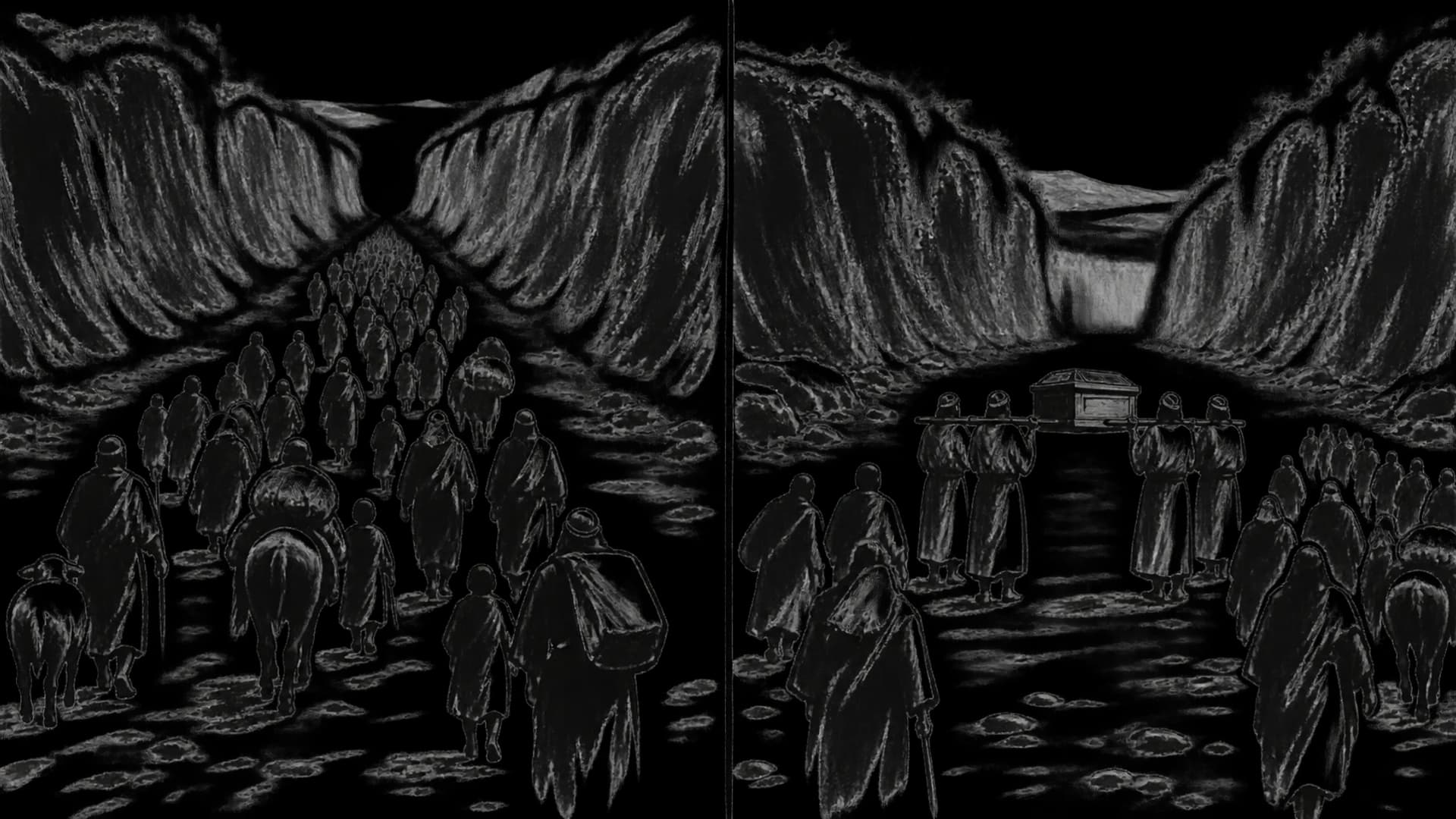
Israel crossed water on dry ground twice.
The first time was the Red Sea. The second time, forty years later, was the Jordan River. Same God and same people. Same miracle: the water stood up, and the people walked across a dry riverbed.
One detail is different, and it is not small.
At the Red Sea, there was no ark. At the Jordan, the ark of the covenant went into the water first.
Why no ark at the Red Sea? Because the law had not been given yet. Israel reached Mount Sinai in the third month after they left Egypt (Exodus 19:1). Moses received the two tablets on that mountain, and God told him to put them inside the ark.
So the ark could not have been at the Red Sea. The law it carried was not yet in Israel's hands. The Red Sea happened before the law. The Jordan happened with the law present, in a box, on the shoulders of priests.
Paul tells us these events were recorded on purpose.
The word translated "examples" is (typoi) τύποι — "types, patterns." A type is a visual aid. God arranged real events so that later readers could watch a doctrine acted out on the ground.
The two crossings match two chapters of Romans.
The Red Sea pictures Romans 6. Israel walked through the sea and came out on the other side with the Egyptian army dead behind them. Paul writes:
The Jordan pictures Romans 7. Here the subject changes. It is no longer sin that we died to. It is the law.
The phrase "through the body of Christ" settles it. Paul does not describe a second death. Romans 6 says we died with Christ. Romans 7 says we died through his body. It is the same cross. Christ died once.
One death. Two results. The Red Sea and the Jordan are two pictures of one event, seen from two sides. Both times the water parted and Israel walked through on dry ground. Both times they passed through a place of death without dying themselves, because someone else made the way. That is what "dry ground" means for you. Christ went through the actual death. You walk through by faith on a dry riverbed.
So why did God give two pictures instead of one?
Because the two truths are learned in order, and many believers stop at the first.
It is easy to accept that you died to sin. Nobody argues with that. But say "you died to the law" and people get nervous. They hear a license to do wrong. Paul faced the same objection and answered it in plain words: "Is the law sin? Certainly not!" (Romans 7:7). The law is holy. The Jordan crossing is not an attack on the law. It is a statement about where you now stand in relation to it.
Watch where the law stood at the Jordan. The priests carried the tablets down into the riverbed and stood there while Israel crossed. The law went into the place of death with the people instead of staying on the bank. Israel did not cross around the law. They crossed with the law present and came up on the far side.
At the Red Sea, the enemy died behind them. At the Jordan, the law came down into the death with them, and they came out no longer under it. Same cross. Different lesson.
When you look at the cross, see both crossings. Your sins are dead. And the law that measured those sins has no claim on you, because you died to it through the body of Christ. If you only see the Red Sea, you will thank God for forgiveness and then walk back under the law to stay holy. That is like crossing the sea and refusing the river. Forty years of wilderness sit between those two bodies of water.
Christ died once, and that one death carried you past your sins and past the law. Do not stop at the sea.
Enjoyed this? Get a short devotional like this in your inbox every morning.