
He Became Poor on Purpose
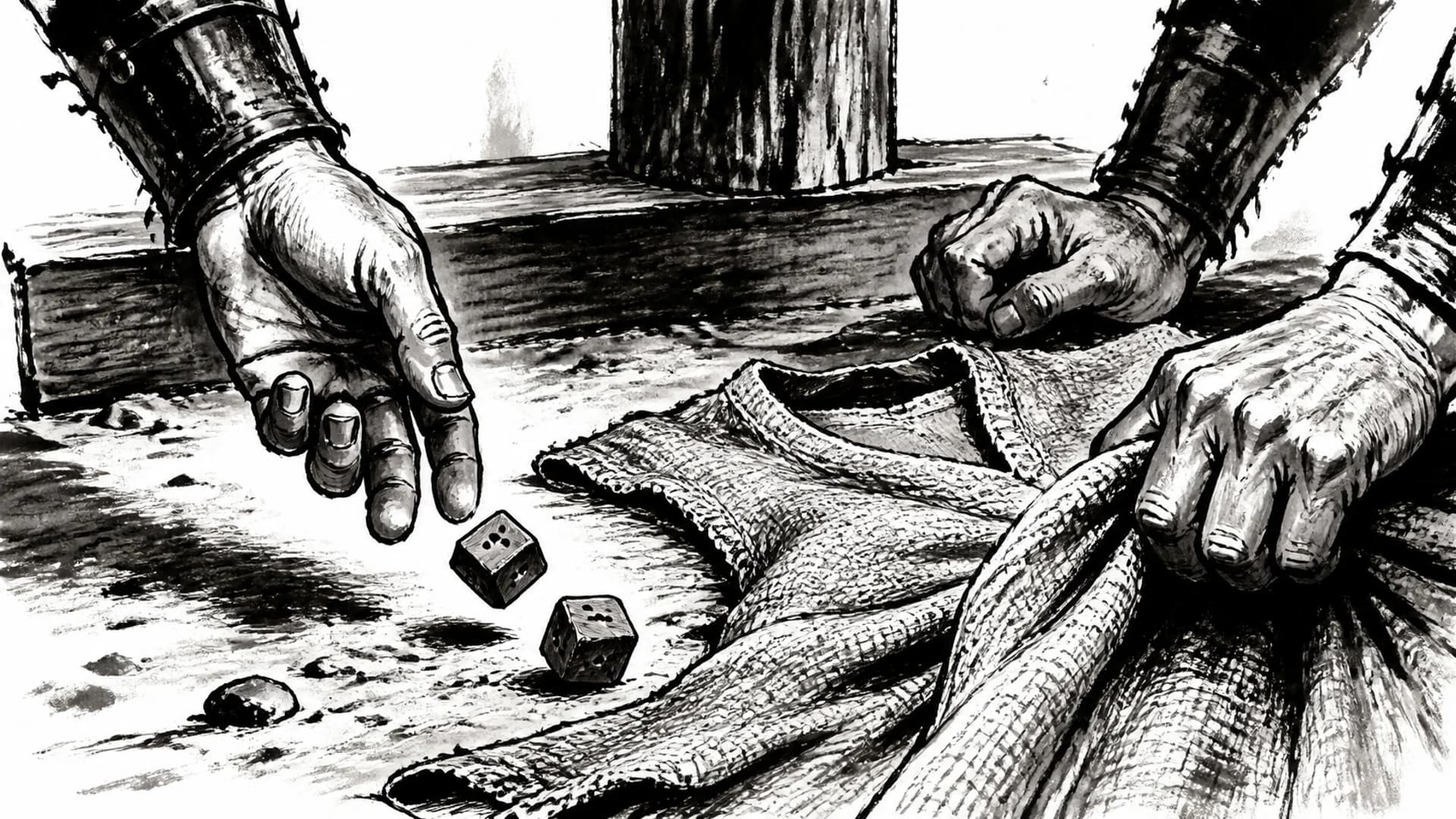
One of the last sights Jesus saw from the cross was soldiers gambling for His clothing.
The man who owned everything hung there while men rolled dice for the little He had left. That scene is the backdrop for one of the most misread verses in the New Testament.
Paul placed this sentence in the middle of two chapters about money. In 2 Corinthians 8 and 9, Paul organizes a financial collection for the poor believers in Jerusalem. He commends the Macedonian churches for their generosity and sends Titus to complete the offering. The entire context is finances and giving. You cannot lift verse 9 out of a money chapter and declare that it means something purely spiritual.
Some teach that Jesus became spiritually poor. But He was never spiritually poor. And follow that logic to its end: if spiritual poverty made us rich, then spiritual poverty must be a good thing, and we should all pursue it. No one believes that. The poverty Jesus took was real.
The word translated "He became poor" is (eptōcheusen) ἐπτώχευσεν — "he became poor, destitute." It comes from (ptōchos) πτωχός — "a beggar, one reduced to complete dependence." This is not modest living. This is a man stripped of everything.
And consider what He gave up. He was rich in the fullest sense.
He set the stars in place. Every field and every ocean belonged to Him. Yet at the cross He owned nothing. Soldiers took His garments. He hung exposed under the curse, in the place of a debtor.
This is the pattern of substitution that runs through the whole atoning work. He took what was ours so we could receive what was His.
He was cursed so you could be blessed, and rejected so you could be accepted. He paid a debt He did not owe because you owed a debt you could not pay. And 2 Corinthians 8:9 adds one more exchange to the list: He was made poor so you could be supplied.
This is not an invitation to greed. Paul wrote these words to fund an offering for the poor. A supplied believer is a believer who can give. The exchange at the cross does not feed the love of money. It frees you from it, because your source is no longer in question.
Jesus purchased your supply. The verse says He did, and it says why: "for your sakes." The question is whether you will receive that part of His work. Nobody forces it on you. But it sits inside the same cross that carried your sins.
Your supply was not promised from a distance. It was purchased at the cross.
Enjoyed this? Get a short devotional like this in your inbox every morning.