
What Does the Bible Say About Forgiveness? How Grace Sets You Free
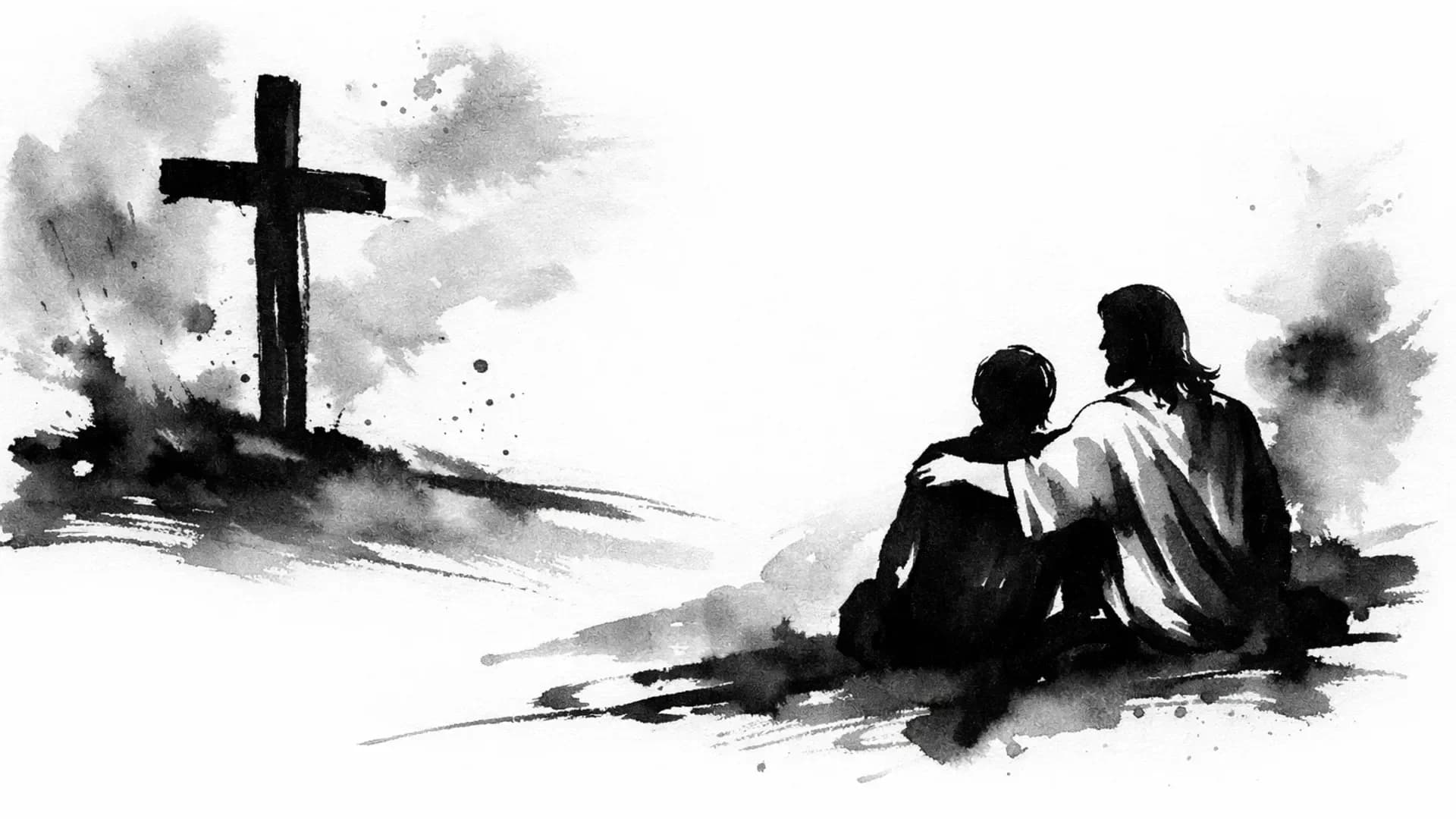
A courtroom and a cross say the same thing: the debt has been paid. The difference is that the cross paid it for everyone who will ever believe — two thousand years before they were born.
Forgiveness is not a fresh idea from a self-help shelf. It is the central act of the Bible. The entire arc of Scripture — from Eden to the empty tomb — moves toward one event: God cancels what humanity owes and declares the account settled. Not because He overlooked the debt. Because He paid it Himself.
But forgiveness in the Bible has two dimensions. God forgives you. And that same forgiveness becomes the power that enables you to forgive others. Both dimensions run on the same fuel: grace.
This article collects the key Scriptures on forgiveness, examines the original Greek and Hebrew words, and shows what a grace-centered view of forgiveness looks like in real life.
Three Greek Words That Unlock Biblical Forgiveness
The New Testament uses three distinct Greek words for forgiveness, and each one reveals a different angle of what God accomplished at the cross.
1. Aphiemi — To Release, to Send Away
The most common word translated "forgive" in the Gospels is (aphiemi) ἀφίημι. It means "to release, to let go, to send away." When Jesus said from the cross, "Father, forgive them, for they do not know what they do" (Luke 23:34, NKJV), the word He used was aphiemi. He asked the Father to release them — to send the debt away from them entirely.
This same word appears in Matthew 6:12: "And forgive us our debts, as we forgive our debtors." The picture is a creditor who tears up a contract. The obligation existed. The record was real. But the creditor chose to release it. That is how God treats your record.
2. Charizomai — To Graciously Cancel
The second word is (charizomai) χαρίζομαι. It shares its root with (charis) χάρις — grace. This word means "to freely and graciously cancel a debt." It carries no requirement from the debtor. The entire initiative belongs to the one who cancels.
Jesus used this word in the parable of the two debtors in Luke 7:42. One man owed 500 denarii. Another owed 50. Neither could pay. And the moneylender "freely forgave them both." The Greek is charizomai — he graciously canceled the debt of both, without condition.
Paul used the same word in Colossians 2:13: "And you, being dead in your trespasses and the uncircumcision of your flesh, He has made alive together with Him, having forgiven you all trespasses." The word "forgiven" is charizomai. God did not negotiate terms. He did not ask you to make a partial payment. He graciously canceled the entire account.
3. Hilasmos — Propitiation
The third word is (hilasmos) ἱλασμός. It means "propitiation" — the satisfaction of a just demand. This word appears in 1 John 2:2:
Hilasmos comes from the same root as (hilasterion) ἱλαστήριον — the mercy seat on the ark of the covenant. When the high priest sprinkled blood on the mercy seat once a year, God's justice was satisfied. The blood stood between God's holiness and man's failure. Jesus is that mercy seat. His blood does not just cover sin. It removes it permanently.
Together, these three words form a complete picture. God releases you (aphiemi). He graciously cancels your debt (charizomai). And He does it all on a righteous legal foundation (hilasmos). Forgiveness in the Bible is not soft. It is thorough.
God's Forgiveness of You: 10 Key Scriptures
1. Ephesians 1:7 — Redemption Through His Blood
The word "redemption" here is (apolutrosis) ἀπολύτρωσις — a term from the slave market. It means "to buy back and set free." Your forgiveness was purchased at a specific price: the blood of Jesus. And the measure of that forgiveness is not your need — it is "the riches of His grace." God's supply always exceeds the demand.
2. Colossians 1:13–14 — Transferred Out of Darkness
Forgiveness here is not a status update. It is a transfer. You have been moved from one domain to another — from the jurisdiction of darkness into the kingdom of God's Son. A forgiven person does not just have a clean record. That person belongs to a new kingdom entirely.
3. Psalm 103:12 — As Far as East from West
North and south have fixed endpoints — the poles. But east and west never meet. David chose a direction of infinite distance. God did not relocate your sin to a far shelf. He removed it along a line that has no end. That is the first benefit He wants you to know.
4. Isaiah 43:25 — For His Own Sake
This verse contains a detail most people miss. God does not forgive you for your sake alone. He forgives you "for My own sake." God's own character — His justice, His love, His covenant faithfulness — compels Him to forgive. It is who He is. And when He says "I will not remember your sins," it does not mean He developed amnesia. It means He chooses, as a righteous Judge, never to hold those sins against you again.
5. 1 John 1:9 — Faithful and Just
John chose two words: faithful and just. He did not say God is "merciful and lenient." He said God is faithful to His covenant and just in His character. When you confess your sin to your Father, you are not earning forgiveness. You are a forgiven child who is honest with the Father who already paid the price. Confession is not a payment. It is a conversation.
6. Hebrews 10:17 — No More Mindful
The Greek phrase for "no more" is (ou me) οὐ μή — a double negative that intensifies the denial. Greek scholars describe this construction as "the strongest form of negation." God does not say "I will try to forget." He says, in effect, "I will never, under any circumstances, hold these sins in mind again." This is the New Covenant promise from Jeremiah 31:34, quoted in Hebrews to show that it is now in full effect. When you approach God, He is not reviewing your file.
7. 2 Corinthians 5:19 — Not on the Record
The word "imputing" is (logizomai) λογίζομαι — a bookkeeper's term. It means to credit to an account, to calculate, to reckon. God does not credit your trespasses to your account. The ledger is clear. And the task He gave you is not to condemn the world — it is to declare the word of reconciliation.
8. Matthew 18:21–22 — Seventy Times Seven
Peter thought seven was generous. The rabbinical standard was three. Jesus did not just raise the number — He destroyed the concept of a limit. Seventy times seven is not 490. It is a statement that forgiveness, for the believer, has no ceiling. Why? Because the forgiveness you received has no ceiling. You cannot give what you have not first received.
9. Luke 23:34 — While They Were Still Guilty
Jesus spoke these words while nails held Him to the wood. The soldiers had not asked for forgiveness. The crowd had not repented. Jesus forgave them at the point of their greatest offense — not after they cleaned up. This is the nature of grace: it reaches you at your worst, not after your best.
10. Romans 4:7–8 — The Blessed Man
Paul quotes David from Psalm 32. The word "blessed" here is (makarios) μακάριος — it means "supremely happy, fortunate." The happiest person on earth, according to Scripture, is not the one who never sinned. It is the one who knows their sin will never be held against them. That settled confidence changes how you live.
The Mercy Seat: Where Forgiveness and Justice Meet
In the Old Testament, the mercy seat — (kapporeth) כַּפֹּרֶת — sat on top of the ark of the covenant. Inside the ark lay three items that represented man's rebellion: the broken tablets of the law, the pot of manna (rejected provision), and Aaron's rod that budded (rejected leadership). Every item testified against Israel.
But God said, "Put the lid on it." The mercy seat covered the evidence. And once a year, the high priest sprinkled blood on that lid — once on the mercy seat for God, and seven times before it for the people. The blood stood between a holy God and a guilty nation.
The Hebrew word kapporeth breaks down into component letters that reveal its meaning: kaf (like, according to), peh-resh (par — a bull, a sacrificial animal), and tav (the cross, the mark). The word itself points forward: "like the sacrificial bull on the cross."
In Romans 3:25, Paul makes the connection explicit:
The word "propitiation" is hilasterion — the same Greek word the Septuagint used for the mercy seat in Exodus 25. Jesus is not just the sacrifice. He is the mercy seat itself.
And here is the detail that ties it all together. When Mary Magdalene looked into the empty tomb after the resurrection, she saw two angels — one at the head and one at the feet — where Jesus had lain (John 20:12). Two figures at either end, looking down at the place where a body had been. It is the mercy seat in living form. But this time, there was no blood to cover sins. The body was gone. The sins were gone. The tomb was the receipt.
Forgiveness Is Judicial, Not Sentimental
This distinction matters more than most people realize.
Many people picture forgiveness as God too kind to hold a grudge. That is not what the Bible teaches. If God simply swept sin under the carpet, He would not be righteous. A judge who lets a criminal go without payment is not a merciful judge — he is a corrupt one.
Romans 3:26 says God designed the cross "to demonstrate at the present time His righteousness, that He might be just and the justifier of the one who has faith in Jesus."
God is both just and the justifier. He did not compromise His holiness. He satisfied it. Every sin you have ever committed — past, present, and future — was placed on Jesus at the cross. Every stroke of judgment fell on Him. When He cried "It is finished" (John 19:30), the Greek word was (tetelestai) τετέλεσται — a word used on financial documents to mean "paid in full." It is in the perfect tense, which indicates a completed action with permanent results.
Your sins were not overlooked. They were punished — in the body of your Substitute. And because they have already been punished, the law of double jeopardy applies: the same crime cannot be tried twice. God would be unjust to punish you for sins He already judged in Christ.
That is why Romans 8:1 can declare with total confidence:
No condemnation. Not "less condemnation." Not "condemnation on hold until your next failure." None. The voice that tells you God is still angry did not come from your Father.
Your Forgiveness of Others: What Jesus Taught
Here is where the two dimensions of forgiveness meet.
In the parable of the unforgiving servant (Matthew 18:23–35), a king forgave a servant who owed ten thousand talents — an amount so large it could never be repaid. But that same servant went out and choked a fellow servant who owed him a hundred denarii — a fraction of his own canceled debt. The king's response was severe: "Should you not also have had compassion on your fellow servant, just as I had pity on you?" (Matthew 18:33, NKJV).
The point is not that God will revoke your forgiveness if you fail to forgive others. The point is that a person who understands how much they have been forgiven will find it difficult to withhold forgiveness from someone else. The two are connected — not as a condition, but as a consequence.
Jesus told Simon the Pharisee: "Therefore I say to you, her sins, which are many, are forgiven, for she loved much. But to whom little is forgiven, the same loves little" (Luke 7:47, NKJV). The woman who anointed Jesus's feet with expensive perfume did not love Him to be forgiven. She loved Him because she knew she was forgiven. The depth of your love is tied to the depth of your revelation of forgiveness.
This same principle works horizontally. The way you treat your spouse, your children, your co-workers, and your enemies flows from what you believe about your own standing with God. If you believe God still holds something against you, you will hold things against others. If you know your account is clear, you can clear theirs.
Paul put it plainly in Ephesians 4:32:
The standard is not "forgive because it is the right thing to do." The standard is "forgive as God forgave you." The cross is both the reason and the model. God does not demand from you what He has not first supplied to you.
Joseph and His Brothers: A Case Study in Grace
The story of Joseph in Genesis 37–50 is one of the longest narratives in the Old Testament, and forgiveness sits at its center.
Joseph's brothers sold him into slavery out of jealousy. He spent years in a foreign land — falsely accused, imprisoned, forgotten. When he finally stood before them as the second most powerful man in Egypt, he had every legal and moral right to retaliate.
Instead, he wept. And he said:
Joseph did not minimize what happened. He did not pretend his brothers were innocent. He said plainly, "You meant evil against me." But he placed their evil inside a larger frame: God's sovereign purpose. And from that frame, forgiveness became possible.
Joseph named his firstborn son Manasseh — (Menasheh) מְנַשֶּׁה — which means "God has made me forget all my toil." Not that Joseph had amnesia about the pit or the prison. But the pain no longer controlled him. God had replaced the bitterness with fruitfulness.
His second son he named Ephraim — (Efrayim) אֶפְרָיִם — which means "God has made me fruitful in the land of my affliction." Joseph did not wait until his circumstances changed to become fruitful. He was fruitful in the land of affliction. That is the fruit of forgiveness. It does not require the other person to repent first. It operates on a supply that comes from God, not from the offender.
Bitterness: The Poison You Drink Yourself
Hebrews 12:15 gives a direct warning:
The verse does not say "lest anyone commit a terrible sin." It says "lest anyone fall short of the grace of God." Bitterness does not begin with a terrible offense. It begins when you lose sight of grace. Long before the root produces visible fruit — resentment, broken relationships, even physical symptoms — the real problem is a person who no longer believes they are fully forgiven.
And the damage is never private. The verse says "by this many become defiled." One bitter person in a family, a workplace, or a church spreads the contamination outward. The bitterness that seems like a personal grudge becomes a communal poison.
The remedy is not willpower. You do not grit your teeth and force yourself to forgive. The remedy is to go back to the foundation: you have been forgiven much. When that reality lands in your heart — not just your head — it becomes possible to release others. Where guilt lives, restoration leaves. Where forgiveness lives, freedom stays.
The next verse in Hebrews 12 mentions sexual immorality (v. 16), which seems unrelated. But the connection is deliberate. Bitterness and sexual sin are linked in the same warning because both grow from the same root: a person who fell short of grace. When you do not rest in your forgiveness, you look for relief in the wrong places. The real battle is always about whether you believe you are fully accepted.
The Forgotten First Benefit
Psalm 103:2–3 lists the benefits of God in a specific order:
The first benefit is forgiveness. The second is healing. The order is not accidental. Forgiveness is the mother of every other blessing. When you settle the question of forgiveness — when you believe that God has forgiven all your sins, not just the ones committed before you accepted Christ, but all of them — the other benefits follow.
Jesus demonstrated this order with the paralyzed man lowered through the roof in Mark 2. He could have healed him immediately. Instead, He said first: "Son, your sins are forgiven you" (Mark 2:5, NKJV). Then He said: "Arise, take up your bed, and walk" (Mark 2:11). Forgiveness came before healing. Identity came before the miracle.
This is why so many believers struggle to receive the other promises of God. They have a theoretical understanding of forgiveness but not a heart revelation. They come into God's presence unsure of their standing, rush through their prayers, and leave before they have spent real time with the Father. Meanwhile, they can sit with a friend for two hours without checking the clock. The difference? They know their friend is not keeping score. They have not yet believed the same about God.
The New Covenant promise in Hebrews 8:10–12 makes the connection explicit. God says: "I will put My laws in their mind and write them on their hearts" — internal guidance. "I will be their God, and they shall be My people" — relationship. "All shall know Me" — intimacy. And the reason for all of it? "For I will be merciful to their unrighteousness, and their sins and their lawless deeds I will remember no more" (Hebrews 8:12, NKJV).
The word "merciful" in that verse is (hileos) ἵλεως — from the same root as hilasterion, the mercy seat. God is not just willing to overlook your sin. He is propitious — He has a righteous, legal, blood-bought basis to treat you as if you never sinned. And because of that, He can guide you, relate to you, and be known by you.
Forgiveness is not the starting line you leave behind. It is the ground you stand on every single day.
The Gospel's Answer
The gospel's answer to guilt is not "do better." The gospel's answer is "it has been done."
The debt has been paid — not reduced, not deferred, not restructured. Paid. The record has been cleared — not hidden, not sealed, not archived. Cleared. And the same grace that cleared your record now gives you the power to clear the records you hold against others.
You are not climbing toward forgiveness. Forgiveness already came down to you.
Enjoyed this? Get a short devotional like this in your inbox every morning.