
Eat the Word Before You Do the Word
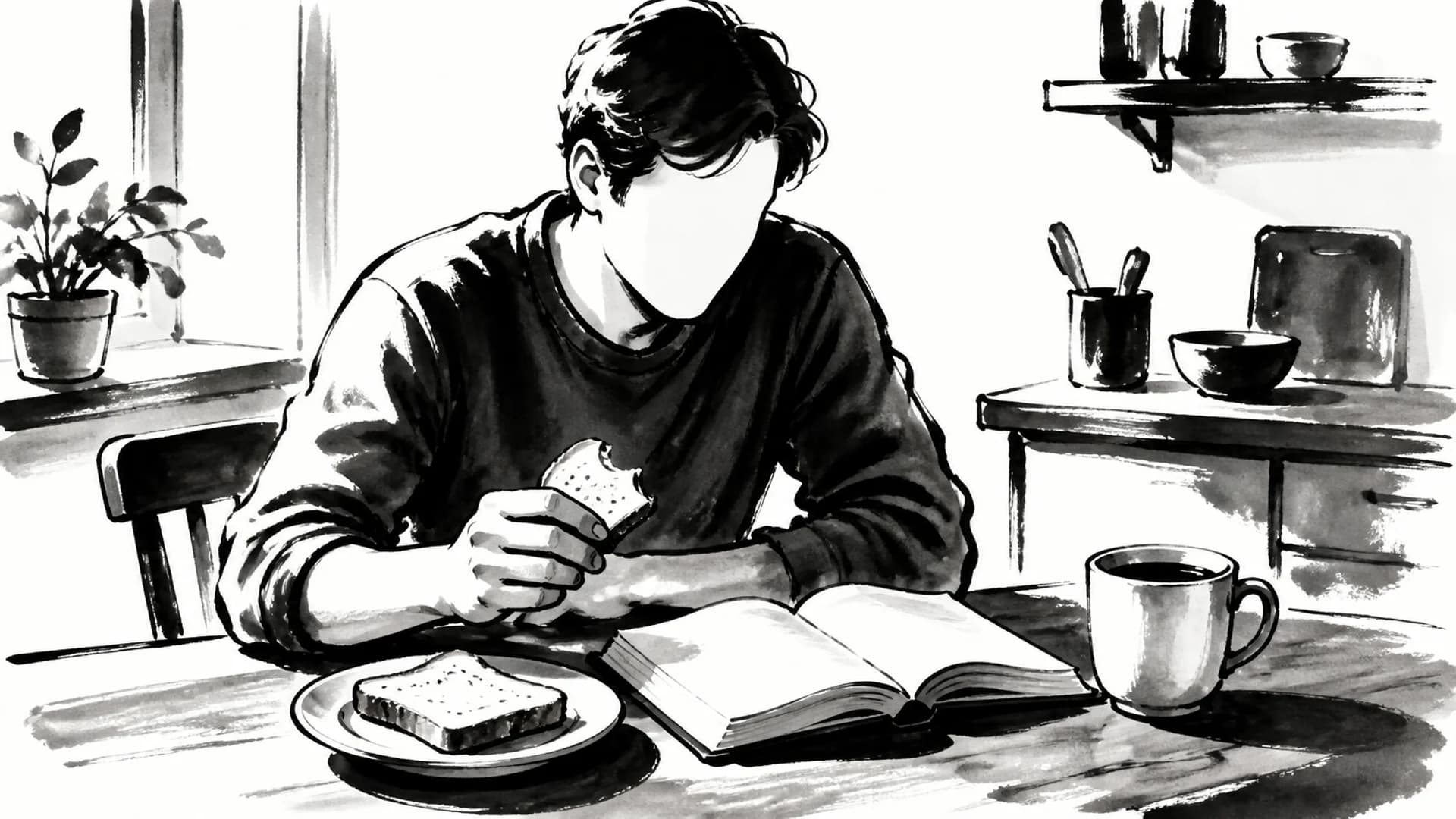
Jeremiah lived under pressure. His nation was collapsing. His friends had turned on him. In the middle of that, he tells us what kept him upright.
Jeremiah did not say, "Your words were found, and I obeyed them." He said he ate them.
That order matters. Most of us open the Bible with a pen in hand and one question in mind: What must I do? It feels responsible. It feels serious. But it puts a task in front of a meal.
The verb Jeremiah uses is (akal) אָכַל — "to eat, consume." It is the plain, ordinary word for a man sitting down to bread. The word does not describe a mystical act. You take food in, and your body handles the rest.
Moses said the same thing to a nation that had spent forty years fed by something that arrived on the ground each morning.
God fed them first. Instruction came after.
When you read to perform, you close the book tired. Your list is longer and your strength is smaller. When you read to eat, you receive strength first, and obedience follows the way a day's work follows breakfast.
A law mentality treats Scripture as an inspection. Under grace, Scripture is a table.
So tomorrow morning, change the first question. Ask what God is serving.
Obedience is what a fed man does, not what a hungry man manufactures.
Enjoyed this? Get a short devotional like this in your inbox every morning.