
The Groom Who Builds Before He Marries
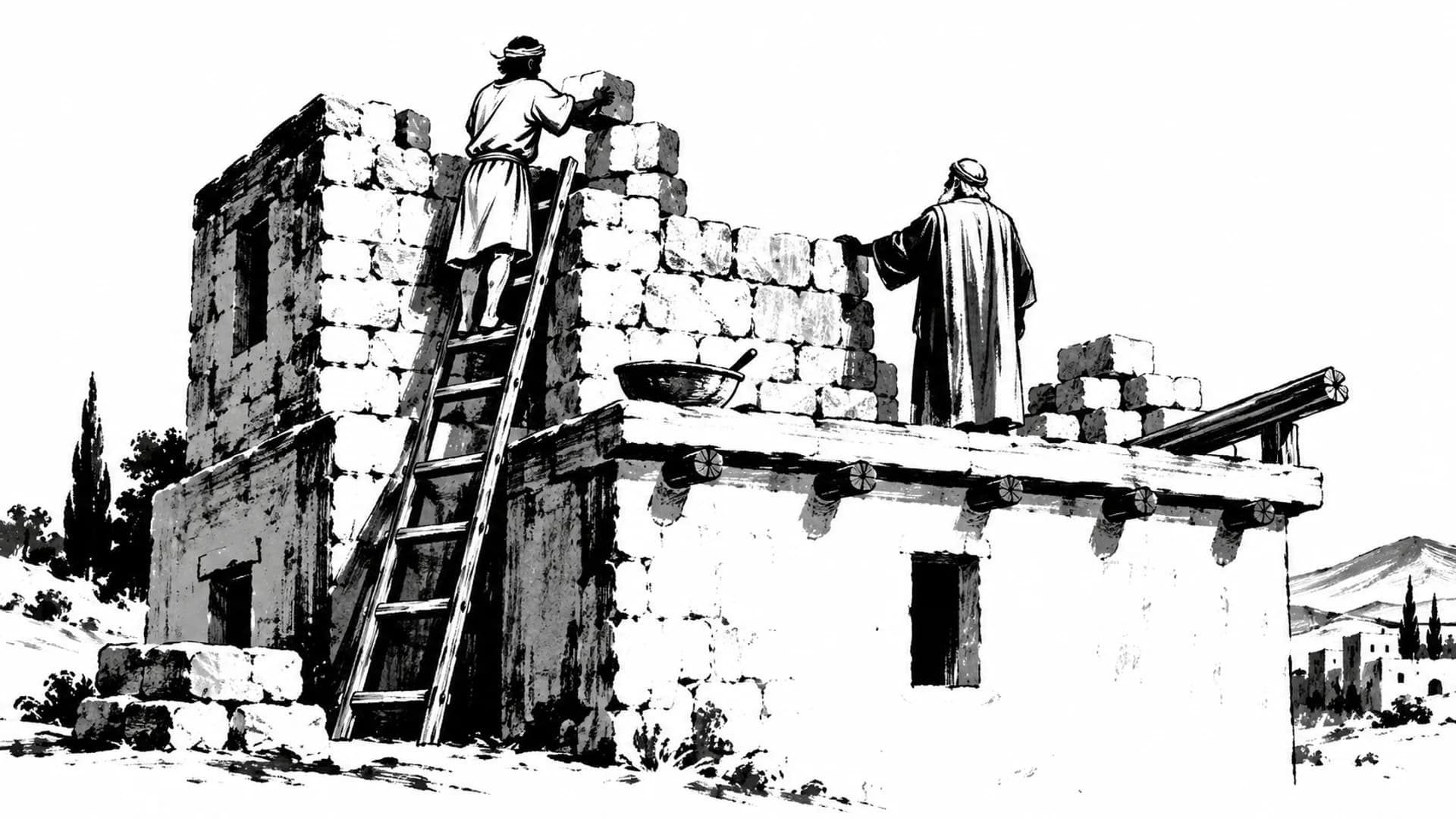
In Galilee in the time of Jesus, a marriage started with two fathers at a table. They agreed on the match. The young man and the young woman were betrothed, and from that day she was his. A betrothal bound both families. Breaking it required a divorce. But the couple did not live together yet.
Before he left, the groom paid the bride price. The Hebrew word is (mohar) מֹהַר — "bride price." It could be gold, or it could be years of labor; Jacob served Laban seven years for Rachel. The price told her family one thing: this man is serious, and he can provide.
Then he went home to his father's house and built. He added rooms to the family home. He did not marry her until the house was finished, and his father judged when it was finished. So the bride did not know the day. She knew the price had been paid and that he was building. Each evening she kept her lamp filled, because the groom came at night, and he came when the house was ready.
Jesus told His disciples He was about to do the same thing.
Every line matches the custom: the Father's house, a place prepared, a return for the bride, and a shared home at the end. Any Galilean listener would have heard a groom speaking.
Paul writes with the same picture in mind.
And the price has already been handed over.
So the church is not a woman who hopes to be chosen one day. She is a betrothed bride whose price has already been paid. Whether He will come was settled at the price. When He comes depends on the house, and the Father alone decides that.
This changes how you wait. The betrothed bride does not sit by the road and wonder whether the groom changed his mind. She fills her lamp and goes about her work. Her certainty rests on a paid price. A calendar has nothing to do with it.
You are not waiting to find out if you are wanted. The price is paid, and a groom always comes back for what he bought.
Enjoyed this? Get a short devotional like this in your inbox every morning.