
Drop the Word to Your Children Anyway
A father sits down next to his nine-year-old son. The boy is watching his favorite TV show. It is his allotted screen time, so the father leaves the TV on.
He opens a Bible to Matthew 4 and shows his son the temptation in the wilderness. Every time the devil speaks, Jesus gives the same answer: "It is written."
The father points to one small word. The devil said "if." He tells his son, "If is doubt." Then he stops. The whole lesson takes a few minutes.
The boy's eyes move from the page to his father, then back to the TV. He asks no question. He does not nod. By every visible sign, the lesson missed.
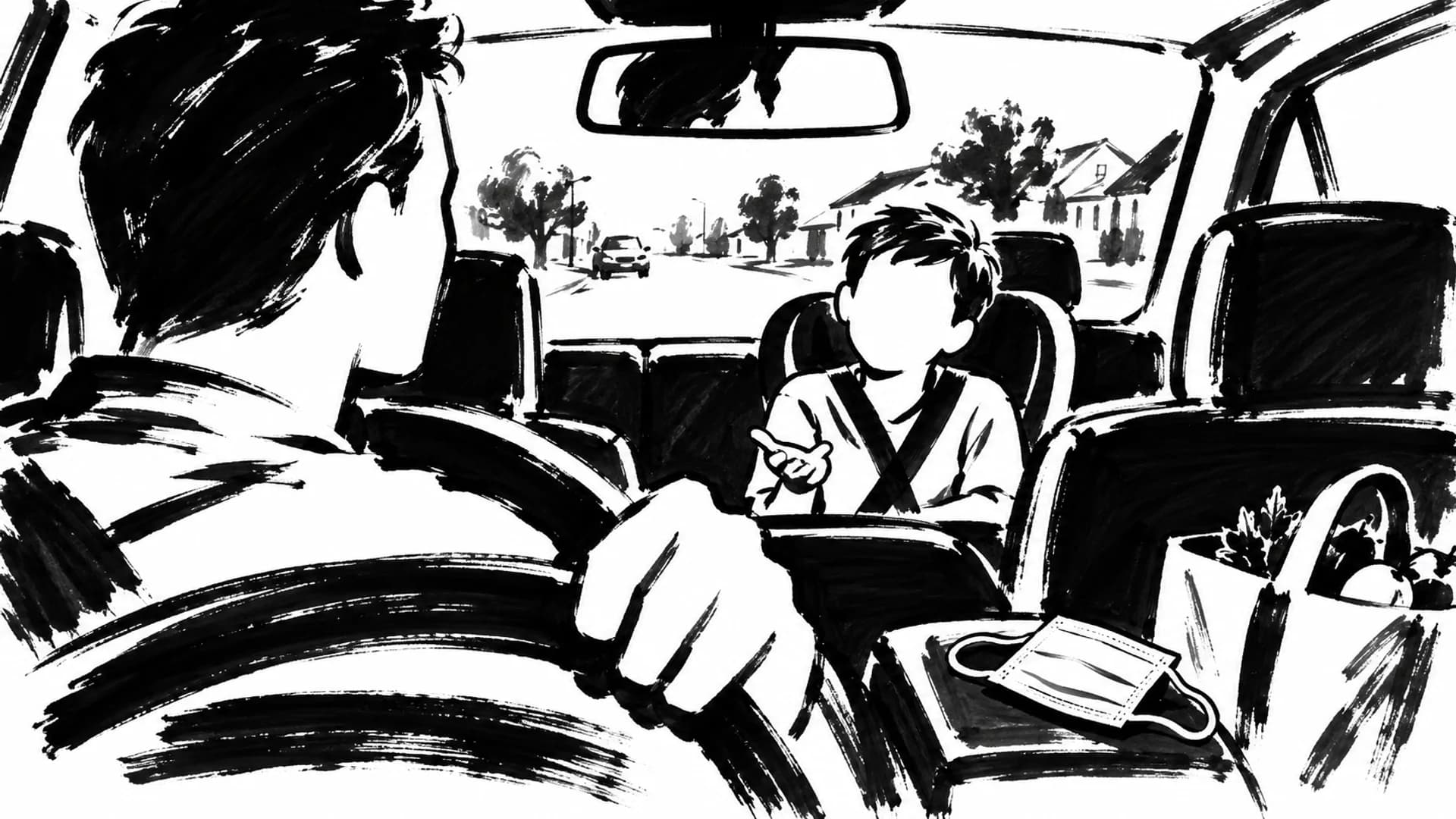
The next day the family runs errands. It is the season of COVID-19, and the news reports that the virus is airborne. The father says something that starts with "If." From the back seat, his son speaks up:
"Abba, 'if' is doubt. The Lord will protect us."
The boy who watched the TV had heard every word. He did more than remember it. He applied it to a real situation, and corrected his own father, one day later.
A bored face is not a closed heart
Many parents read a child's face and decide the child is not receiving. A blank look. A glance at a screen. A shrug. So they wait for a better moment, a moment when the child looks interested. For many children that moment never arrives, and the parent never shares the Word.
Children often receive more than they show. Many adults remember a moment in church as a child when God felt near. They had no words for it. They told no one, and their parents never knew it happened.
Short and often beats long and rare
Moses did not tell parents to schedule a lecture. He told them to talk about God's words in ordinary moments.
When you sit in your house. That covers a couch in front of a TV. When you walk by the way. That covers a car on the way to the store. The father in this story did not switch off the show or call a family meeting. He shared one verse and one observation, then let his son return to his program.
A short word has an advantage with children: it fits. A nine-year-old can carry "if is doubt" in his head all day. He will not carry a forty-minute sermon.
The seed does the work
Jesus described a farmer who scatters seed and goes to bed.
The farmer does not dig up the field every hour to check the roots. He scatters, sleeps, gets up, and the seed grows. A parent can do the same. Your part is to put the Word in front of your child. Your persuasion is not what makes it grow. The Word carries its own life.
Paul reminded Timothy where his faith started.
Earlier in the same letter, Paul names the people who put those Scriptures in front of him: his grandmother Lois and his mother Eunice. Nobody recorded how many times young Timothy looked away while they read.
Do not write them off
Some parents give up before they start. "My kids are not interested." "They will roll their eyes." Maybe they will. Share the verse anyway. Say, "I saw something interesting in the Bible today," and tell them in two sentences.
The fruit may come back the next day, as it did in that car. It may come back years later, when your child prays alone for the first time and realizes a Father is listening. Either way, it grows from what you planted on an ordinary afternoon.
A child can watch the TV and still hear the verse, so say the verse.
Enjoyed this? Get a short devotional like this in your inbox every morning.