
What Does the Bible Say About Burnout? Permission to Rest
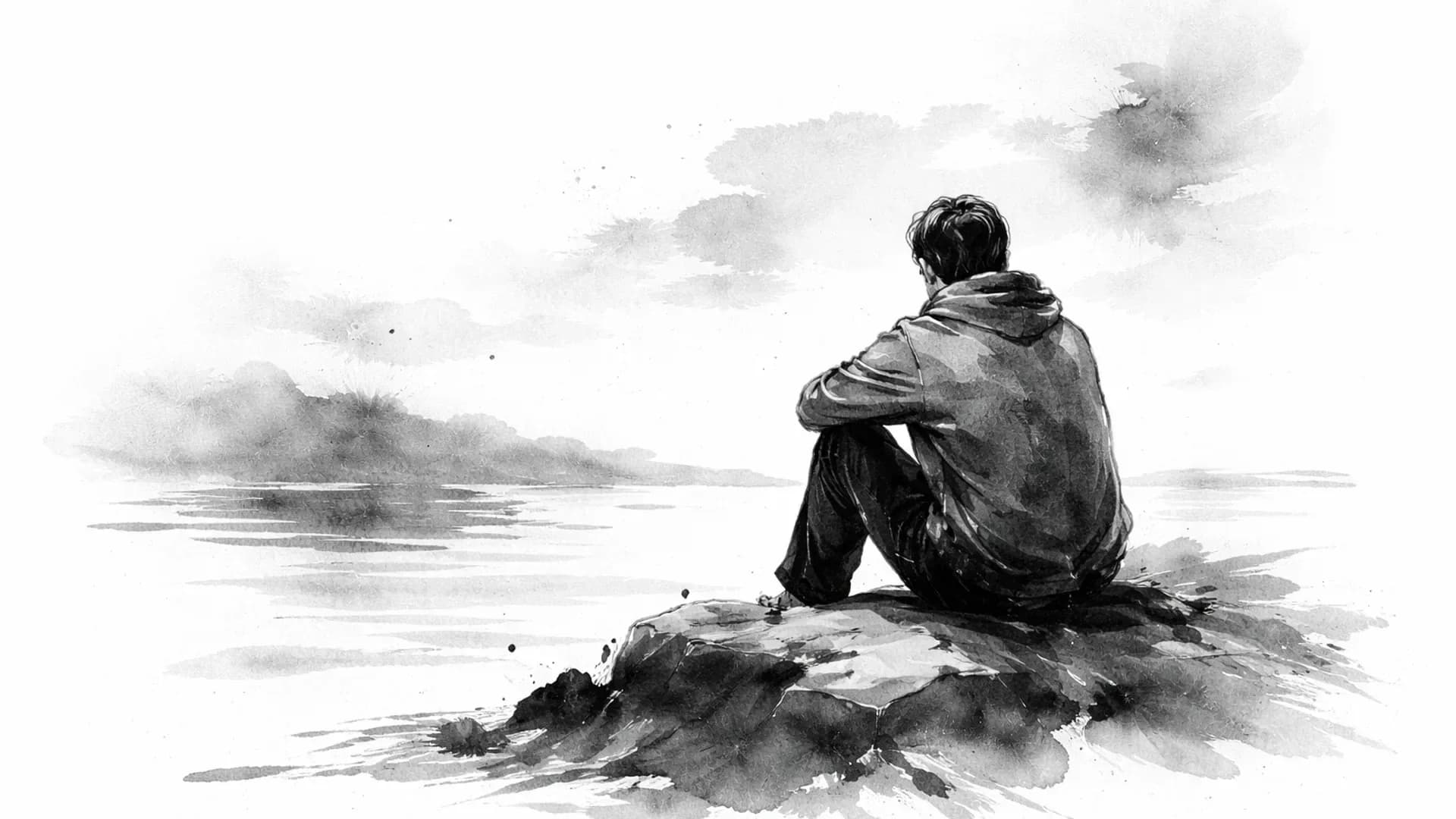
A prophet called down fire from heaven, won a national showdown against 450 false prophets, and outran a king's chariot. The next day, he asked God to let him die.
That is burnout. Not a lack of talent. Not a lack of faith. Not a failure of character. Burnout is what happens when the output exceeds the supply, and the Bible addresses it with more tenderness than most people expect.
The modern word "burnout" did not exist in the ancient world. But the condition did. Elijah collapsed under a tree. Moses tried to judge two million people alone. Martha served until she snapped at God. Each story reveals the same pattern: good people, noble work, total depletion.
What sets the Bible apart is God's response. He never rebuked the burned-out. He fed them. He let them sleep. He sent help. He drew closer.
This article traces what Scripture says about burnout: the original Hebrew and Greek words behind it, the key stories, the signs, and God's grace-centered answer to exhaustion.
What "Burnout" Looks Like in the Original Languages
The Bible does not use a single word for burnout. It uses several, and each one reveals a different dimension of exhaustion.
Kopos: Toil to the Point of Collapse
The Greek word (kopos) κόπος means toil that produces weariness and exhaustion. It appears in Matthew 11:28 when Jesus says:
The word "labor" here is (kopiao) κοπιάω, to work until you are spent, to toil past the point of fatigue. Jesus directed this invitation at people who had already passed their limit. He did not say "try harder." He said "come."
In the Hebrew New Testament used by Messianic believers in Israel today, this word corresponds to (amal) עָמָל, painful, wearisome toil. It is the same root behind the name Amalek, Israel's first enemy after the Exodus. Painful toil is not just a condition. In the Bible, it is an adversary.
Merimnao: A Mind Pulled Apart
The Greek word (merimnao) μεριμνάω comes from (merizo) μερίζω, which means "to divide." It describes a mind pulled in ten directions at once: distracted, fragmented, unable to focus. This is the word Jesus used when He spoke to Martha:
Martha was not lazy. She was the opposite: she worked so hard that she broke. The word "worried" here means she was divided into many parts, stretched across too many demands. That is burnout.
Thorybazo: A Riot in the Mind
The second word Jesus used for Martha's condition is (thorybazo) θορυβάζω, which comes from (thorybos) θόρυβος, a Greek word for a riot, a tumult, a noisy crowd. Martha's mind was not just divided. It was loud. A crowd of thoughts shouted over each other: You haven't done this yet. You need to do that. Quick. Do it now. No one is helping.
Put (merimnao) μεριμνάω and (thorybazo) θορυβάζω together and you have a clinical portrait of burnout: a mind fractured across too many tasks while an internal riot of anxious thoughts demands more.
Chuwsh: The Rush That Leads to Shame
The Hebrew word (chuwsh) חוּשׁ means to hurry, to rush, to make haste. It is an onomatopoeia: the word sounds like a sudden gust of wind. The prophet Isaiah connects this word directly to faith:
The apostle Peter quotes this same verse in 1 Peter 2:6, but the Holy Spirit translates "will not be in haste" as "will by no means be put to shame." The two ideas are linked. The person who believes does not rush. The person who does not rush will not be put to shame. Hurry and shame walk together. Rest and honor walk together.
Elijah: The Bible's Clearest Case of Burnout
The story of Elijah in 1 Kings 18–19 is the most detailed account of burnout in the Bible. It follows a pattern that researchers and clinicians recognize today: peak performance, followed by a threat, followed by total collapse.
The Victory
Elijah stood on Mount Carmel and issued a challenge to the entire nation of Israel: "If the Lord is God, follow Him; but if Baal, follow him" (1 Kings 18:21). He faced 450 prophets of Baal alone. They called on their god from morning until afternoon. Nothing happened.
Then Elijah stepped forward. He repaired the altar. He drenched the sacrifice with water three times. He prayed a prayer that lasted less than thirty seconds. Fire fell from heaven and consumed the sacrifice, the wood, the stones, the dust, and the water in the trench.
After that, Elijah prayed for rain. After three and a half years of drought, rain came. Then the hand of the Lord came upon Elijah and he outran King Ahab's chariot all the way to Jezreel, a distance of about 25 miles.
The Collapse
The next morning, Queen Jezebel sent a message: "So let the gods do to me, and more also, if I do not make your life as the life of one of them by tomorrow about this time" (1 Kings 19:2).
One woman's threat undid what fire from heaven had confirmed. Elijah ran. He left his servant behind. He traveled a full day into the wilderness alone. He sat down under a broom tree (a low desert shrub) and prayed to die:
This is a man who called down fire from heaven less than 48 hours earlier. Burnout does not respect yesterday's victory. It attacks after the output, not before it. This is why pastors, leaders, parents, and high achievers are so vulnerable: the crash comes after the climb.
What Elijah Lost
Elijah lost three things that burnout always takes:
- Perspective. He said, "I am no better than my fathers." He compared himself to dead men and found no reason to continue.
- Connection. He left his servant, the only companion he had, and went into the wilderness alone. Burnout isolates.
- Identity. The man who once said, "The Lord God of Israel, before whom I stand" (1 Kings 17:1) could no longer see the God before whom he stood. He could only see the woman before whom he fled.
When you walk by sight, you lose sight of the invisible God.
Moses: When the Load Is Too Heavy for One Person
In Exodus 18, Moses sat from morning until evening to judge the disputes of the entire nation of Israel, roughly two million people. His father-in-law Jethro watched for one day and said:
The phrase "wear out" here is (nabel) נָבֵל, to wilt, to wither, to drop like a leaf from a tree. Jethro told Moses: you will wilt. Not might. Will.
Jethro's solution was not spiritual. It was structural. He told Moses to appoint leaders over thousands, hundreds, fifties, and tens. Delegate. Share the load. Let other capable people carry what you were never meant to carry alone.
God affirmed this advice. Moses followed it. The principle is clear: burnout is not always a spiritual problem. Sometimes it is an organizational one. Some people burn out not because they lack faith, but because they refuse to share the weight. That refusal, however noble it looks, is not faith. It is unsustainable.
Martha: The Sickness of Hurry
The story of Martha and Mary in Luke 10:38–42 is often read as a lesson about priorities. It is that. But it is also a portrait of burnout in real time.
Martha welcomed Jesus into her home. She prepared food for the Creator of the universe. The work itself was good. But Martha was "distracted with much serving" (Luke 10:40). The Greek word for distracted is (perispao) περισπάω, to be dragged away, pulled in every direction.
She turned on her sister: "Lord, do You not care that my sister has left me to serve alone?" (Luke 10:40). Then she gave God a command: "Tell her to help me."
When stress reaches a certain point, it turns inward. It turns generous people bitter. It makes servants resentful. It causes people to blame the very ones they love, including God. Martha accused Jesus of not caring. That accusation did not come from her character. It came from her exhaustion.
Jesus did not rebuke her for the work. He addressed the inner condition. The word "worried", (merimnao) μεριμνάω, means she was divided, fragmented. The word "troubled", (thorybazo) θορυβάζω, means her mind was a riot of competing demands. And His prescription was a single word: "One thing is needed" (Luke 10:42).
The cure for burnout is not fewer tasks. It is one focus. Mary sat at the feet of Jesus and heard His word. She chose the good part. Sitting is a posture of rest. Rest is a posture of faith.
The Austrian-Canadian endocrinologist Hans Selye, the physician who first defined the concept of biological stress, noticed a pattern among his cardiac patients. They sat on the edges of their chairs. They parked their cars nose-out for a fast getaway. They rushed even when there was nowhere to go. He called them Type A personalities and documented their disproportionate rate of heart disease. Selye did not know it, but Jesus had already diagnosed the condition two thousand years earlier: worried and troubled about many things.
The sickness of hurry is real, and the prescription is to stop, sit, and receive.
10 Bible Verses About Burnout and Rest
1. Matthew 11:28–30: Come to Me
Jesus said this while He was being rejected. City after city turned Him away. And in the middle of that rejection, He offered rest. Not a program. Not a method. A Person. The word "gentle" in the original Greek is (praus) πραΰς, strength under control. The burned-out do not need more force. They need a gentle Savior.
2. Psalm 127:1–2: The Bread of Sorrows
The "bread of sorrows" is a Hebrew picture of anxiety consumed as a daily meal: compulsively, habitually, late at night. The remedy is not more effort. It is identity. The word "beloved" here is (Yedidyah) יְדִידְיָהּ, beloved of the Lord. You are not a worker who earns God's approval. You are a beloved child who already has it.
3. Isaiah 40:28–31: Renewed Strength
Even youths, those with the most natural energy, will burn out. The word "wait" here is (qavah) קָוָה, which means to bind together, like threads twisted into a rope. To wait on the Lord is to bind your weakness to His strength. The result is renewed power: not self-generated, but received.
4. Galatians 6:9: Do Not Grow Weary
The phrase "grow weary" is (ekkakeo) ἐκκακέω, meaning to lose courage, to become faint-hearted, to give up under pressure. Paul acknowledged that weariness in good work is real. He did not deny it. He addressed the timing: "in due season." The harvest is guaranteed. The delay does not mean denial.
5. Exodus 33:14: My Presence Will Go with You
God spoke this to Moses during one of the most stressful seasons of his life, right after the golden calf incident. God did not offer a strategy. He offered His Presence. The Hebrew word for "rest" here is (nuach) נוּחַ, to settle down, to be quiet, to find a permanent place of calm. It is the same root as Noah's name. And the first time grace appears in the Bible, it is connected to Noah, the man whose name means rest:
Rest found grace. The more you rest, the more grace meets you.
6. 1 Kings 19:7: The Journey Is Too Great for You
God did not tell Elijah to toughen up. He said the journey was too great. He validated the exhaustion. He acknowledged the human limit. And then He provided food for forty days of travel. One meal from God sustained Elijah for more than a month. One word from God can carry you further than a year of effort.
7. Hebrews 4:9–11: The Rest That Remains
The only diligence required under grace is the diligence to stop striving. The opposite of faith in this passage is not doubt; it is restlessness. Your only battle under grace is to remain at rest.
8. Psalm 23:1–3: He Makes Me Lie Down
The verb is makes. He makes me lie down. Sometimes God does not wait for you to choose rest. He engineers circumstances that force it. A season of slowdown may not be punishment. It may be a shepherd who loves you too much to watch you collapse. And the result of that rest? He restores my soul, the emotional, mental part of you that burnout damages most.
9. Matthew 6:26–27: You Cannot Add by Worry
Jesus asked a factual question. Has worry ever produced a single measurable result? The answer is no. Worry does not protect you. It impersonates protection. The areas you worry about most are the areas where grace flows least.
10. John 15:4–5: Abide and Bear Fruit
The word "abide" is the opposite of hustle. It means to remain, to stay, to dwell. Jesus did not say "work harder and you will produce more." He said the branch that stays connected to the vine bears fruit naturally, without strain. Fruit does not come from effort. It comes from connection.
5 Signs of Burnout the Bible Identifies
The Bible does not use the clinical term "burnout," but it documents the symptoms with precision:
1. Isolation. Elijah left his servant behind and went into the wilderness alone (1 Kings 19:3–4). Burnout convinces you that no one can help and no one understands.
2. Distorted identity. Elijah said, "I am no better than my fathers" (1 Kings 19:4). Burnout replaces your God-given identity with a false comparison. Your identity in Christ does not depend on your output.
3. Resentment toward others. Martha accused Jesus of not caring and demanded that He correct her sister (Luke 10:40). Burnout turns servants into accusers.
4. Loss of perspective. Elijah told God, "I alone am left" (1 Kings 19:10). God corrected him: seven thousand had not bowed to Baal. Burnout narrows your field of vision until you can only see what is wrong.
5. Physical collapse. Elijah fell asleep under a tree. His body shut down. The Hebrew word used for Elijah's condition is the same weariness described in Isaiah 40:30: even young men "utterly fall." Burnout is not just emotional. It lives in the body.
God's Response to the Burned-Out: Food, Sleep, Presence
This is the most important section of this article. What did God do when His prophet burned out?
He did not rebuke him. He did not quote Scripture at him. He did not give him a five-step plan.
He fed him. An angel, the pre-incarnate Christ, touched Elijah and said, "Arise and eat." There by his head was a cake baked on coals and a jar of water (1 Kings 19:5–6).
He let him sleep. Elijah ate, drank, and lay down again. God did not wake him with a lecture. He let him rest.
He fed him a second time. The angel came back and said, "Arise and eat, because the journey is too great for you" (1 Kings 19:7). God acknowledged the weight of what lay ahead and provided enough supply to cover it.
He let Elijah travel at his own pace. In the strength of that food, Elijah walked forty days to Horeb (1 Kings 19:8). God did not rush the recovery.
He met him with a question, not a criticism. At the cave, God asked, "What are you doing here, Elijah?" (1 Kings 19:9). The question was not accusation. It was an invitation to talk. God was present, and the fact that He asked "What are you doing here?" proved it. For God to say "here," God was also there.
He revealed Himself, not in power, but in gentleness. God was not in the wind. Not in the earthquake. Not in the fire. He was in the still, small voice (1 Kings 19:11–12). A burned-out person does not need more force. They need tenderness.
In the day of Elijah's faith, ravens fed him. In the day of his burnout, angels served him and God Himself drew near. God does not withdraw from the exhausted. He moves closer.
Rest Is Not Laziness: It Is Faith
One of the most counterintuitive truths in Scripture is that rest is an act of faith, not an abdication of responsibility.
When Israel arrived at a place called Rephidim, a Hebrew name that means "resting places," Amalek attacked (Exodus 17:8). The name Amalek comes from the root (amal) עָמָל, meaning painful toil and wearisome labor. Every time you enter rest, the spirit of anxious toil will resist you. The attack is proof that you have arrived at the right place.
During that battle, Moses held up his hands. When his hands dropped, the enemy prevailed. Aaron and Hur came alongside him, and they made him sit down. Only when Moses sat, Israel won. No one sits down in the middle of a battle. But God's way to victory has always been: sit down first.
You do not stand at a table. You sit. And God prepares it not after the enemies leave, but while they are still present.
The Hebrew word for "bread" is (lechem) לֶחֶם. The Hebrew word for "fight" is (lacham) לָחַם. They share the same root letters. In other words, the way you fight is by feeding. The more you feed on God's Word, the more you sit and receive, the more you are actually defeating the enemy.
A business executive once shared this observation: every time she worried about a situation and rushed into her office to fix it, things got worse. But when she stopped, rested, and listened to the Word, things worked out, and even a business mistake turned to profit. The areas she stopped striving over were the areas where supply began to flow.
The Gospel's Answer to Burnout
The gospel does not say "work harder." The gospel does not say "push through." The gospel says: "It is finished" (John 19:30).
God finishes the work, and then He tells you to start where He finished. You are not climbing toward completeness. You are already complete in Christ (Colossians 2:10). You are not trying to defeat an enemy who has already been defeated. The very act of trying to defeat a defeated enemy is unbelief.
In the garden of Eden, God told Adam: "By the sweat of your face you shall eat bread" (Genesis 3:19). Sweat became the currency of survival after the fall. But in another garden, Gethsemane, Jesus sweat blood. The redeeming quality of His blood touched the cursed ground, and the curse of painful toil was broken. You have been redeemed from the sweat.
That does not mean you stop working. It means you stop striving. You work from an inward place of rest: not toward approval, but from it. Not toward acceptance, but from a position already accepted. Not toward provision, but from the knowledge that supply is already flowing toward you.
Jesus never hurried. His disciples never saw Him rushed, anxious, or sick. He always had time for the person in front of Him. He stopped for Zacchaeus. He paused for the woman who touched His garment. He operated in what can only be described as an unhurried pace of grace.
And the only time He told someone to hurry? When it was time to be saved. "Zacchaeus, make haste and come down" (Luke 19:5). The only urgency in the kingdom is the urgency to receive what God has already provided.
The burnout you carry is real. The exhaustion is not imagined. But the solution is not more output. It is more of Him.
You were never meant to carry every burden, answer every need, and hold everything together on your own. God did not design you for that. He designed you to be yoked with a Savior who said, "My yoke is easy and My burden is light" (Matthew 11:30).
The burned-out do not need a louder voice. They need a still, small one that says: "Arise and eat, because the journey is too great for you."
And if it is too great for you, it is not too great for Him.
Enjoyed this? Get a short devotional like this in your inbox every morning.