
Peace Is Not a Mood
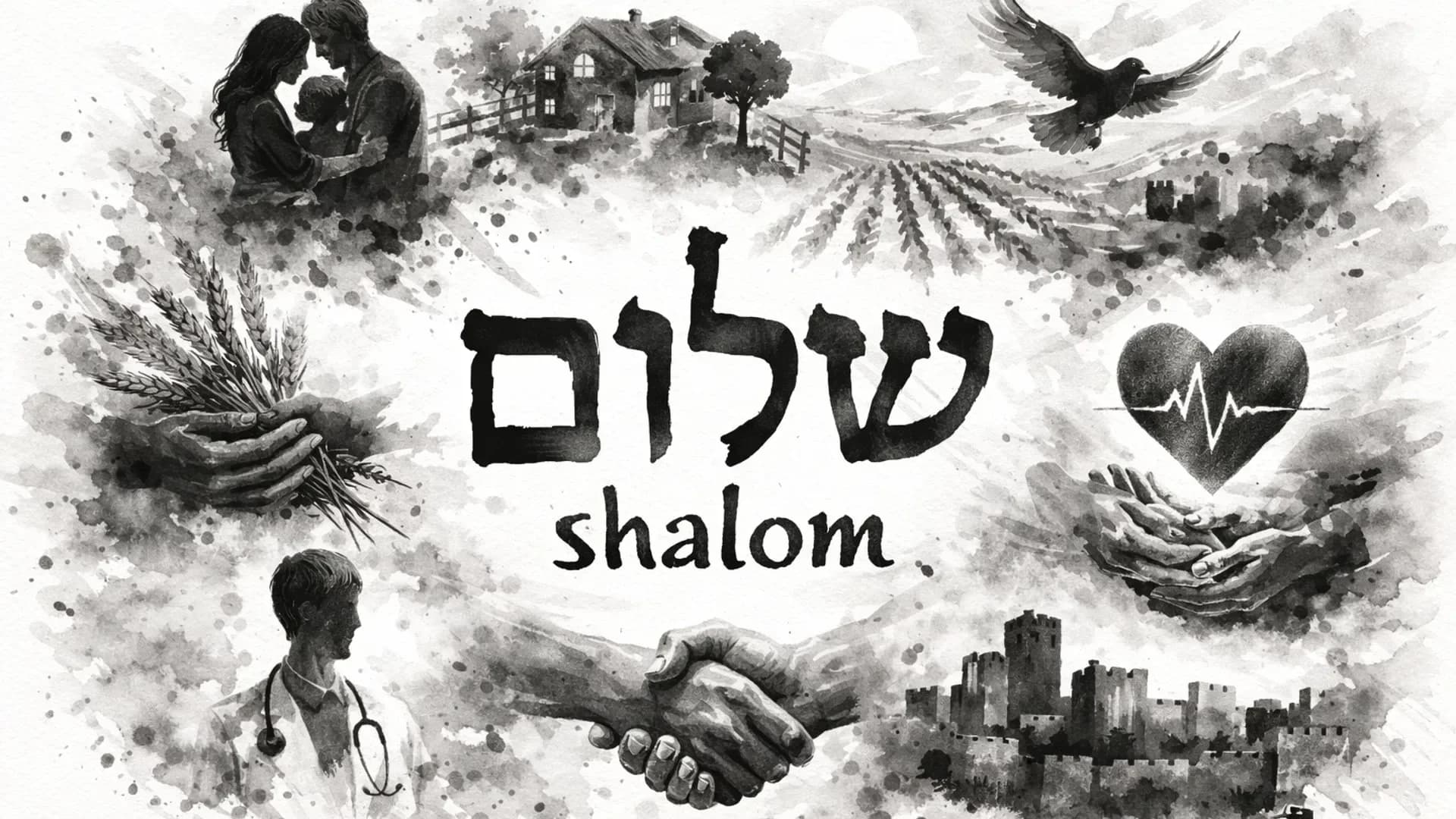
We have domesticated the word "peace."
When we use it, we usually mean a silent room or a calm state of mind. We treat it like a mood.
But the biblical concept of peace is far stronger. It is architectural. It is structural.
In the New Testament, the Greek word for peace is (eiréné) εἰρήνη. In the Old Testament, the Hebrew word is (shalom) שָׁלוֹם.
Neither of these words is limited to a feeling.
If you ask a Hebrew scholar, or consult resources like Mounce's Expository Dictionary, you will find that (shalom) שָׁלוֹם is a massive, all-encompassing word. It translates to prosperity, well-being, health, completeness, and safety.
When God promises peace, He is not just offering a moment of silence. He is offering a state where nothing is missing and nothing is broken. It covers the physical, the relational, and the material.
This completeness is part of the identity of Jesus Himself. In the last book of the Bible, He calls Himself the Alpha and the Omega (the first and last letters of the Greek alphabet). But speaking to His own people, He would be the (Aleph) א and the (Tav) ת, the first and last letters of the Hebrew alphabet.
He is the beginning and the end of the story. He holds the structure together.
Don't settle for a definition of peace that only touches your emotions. God’s desire is for a wholeness that permeates your health, your resources, and your relationships.
Peace isn't just the absence of noise; it is the presence of wholeness.
Enjoyed this? Get a short devotional like this in your inbox every morning.