
Prosperity Has a Purpose
There is a difference between prosperity for ego and prosperity for purpose.
Prosperity often gets a bad reputation because it is associated with greed or self-indulgence. But in the Bible, wealth is a tool for covenant assignment.
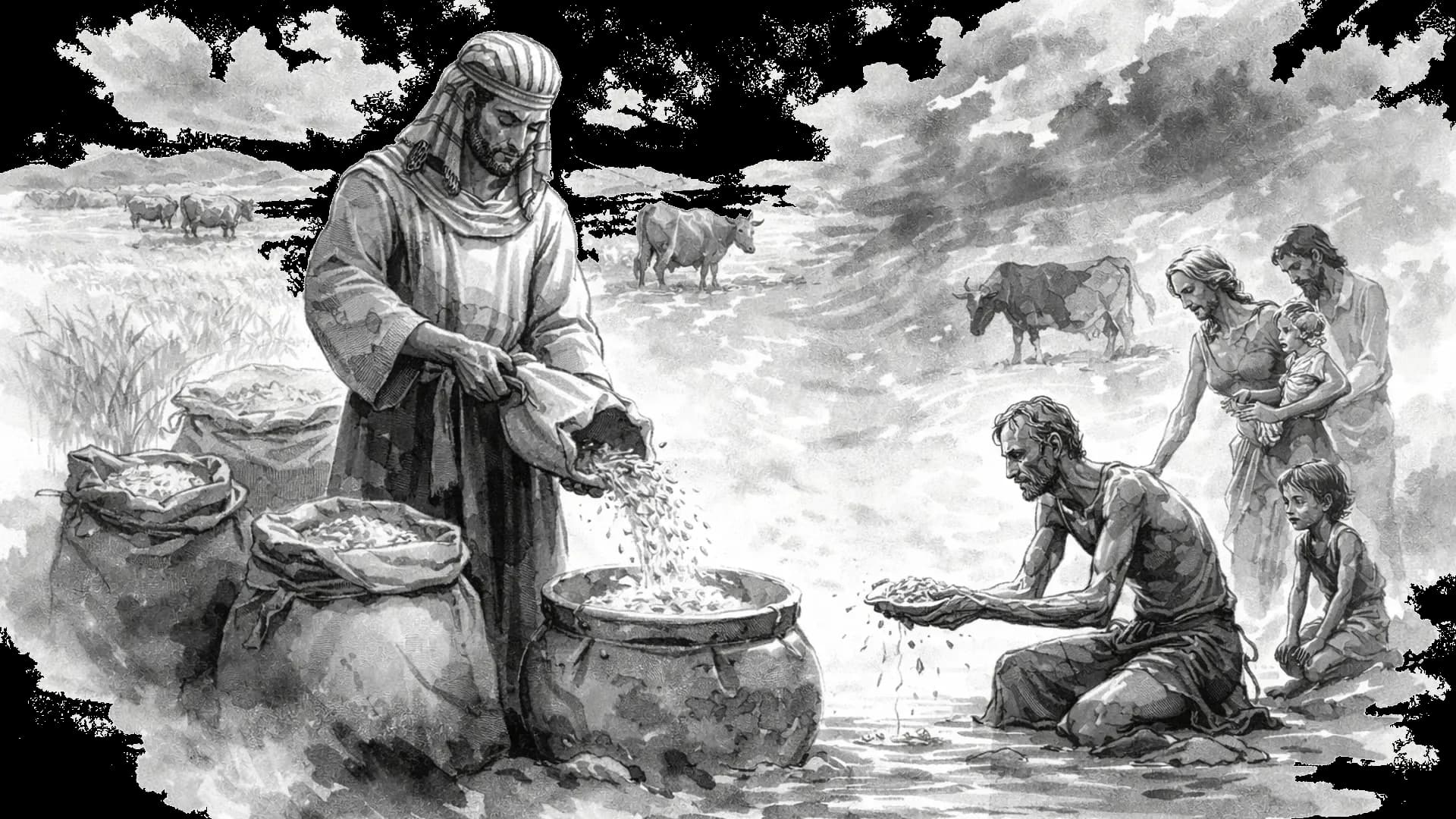
Consider Joseph in Egypt. Pharaoh had a dream of seven fat cows and seven gaunt cows. God gave Joseph the interpretation: seven years of abundance would be followed by seven years of famine.
Joseph did not just interpret the dream; he built a financial policy around it. Genesis records his plan:
Joseph’s wisdom was simple: Save one-fifth (20%) during the years of plenty.
Because they stored wealth when times were good, they preserved life for the region when the famine hit. They prospered to feed nations, not merely to fill barns.
This is the Joseph Principle.
-
Recognize the season. You will not always have surplus.
-
Set aside the portion. 10% belongs to God (the tithe), and the next 10-20% belongs to your future self (savings and investment).
-
Preserve the purpose. The goal is to have a storehouse ready when the world runs dry.
You are responsible for what enters your hands. Manage your resources so you can give bread when others are starving, rather than showing off.
You cannot feed the poor if you are one of them.
Enjoyed this? Get a short devotional like this in your inbox every morning.